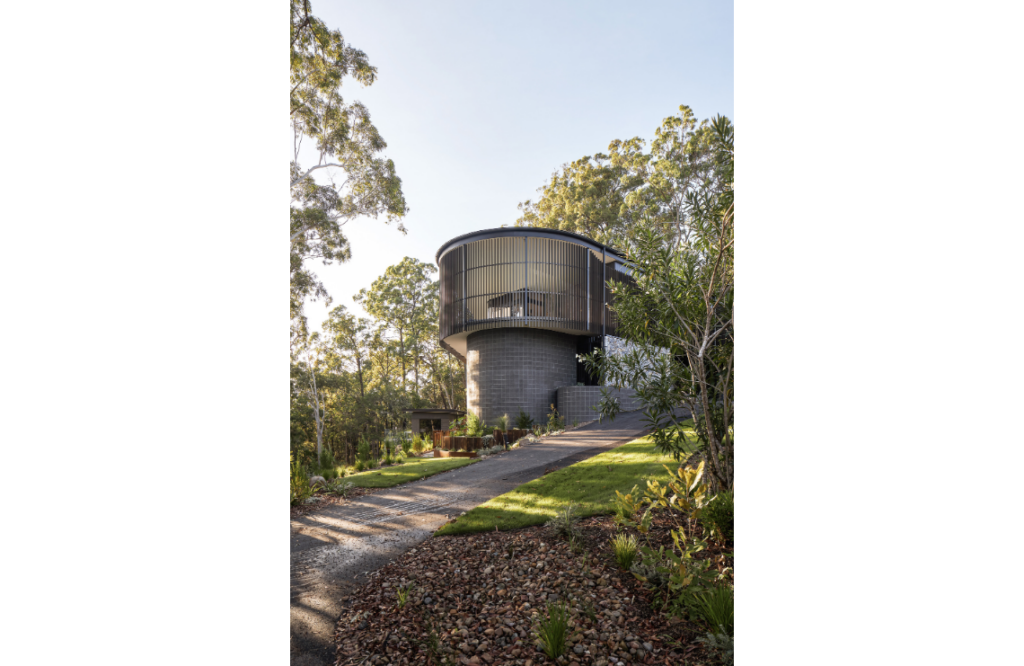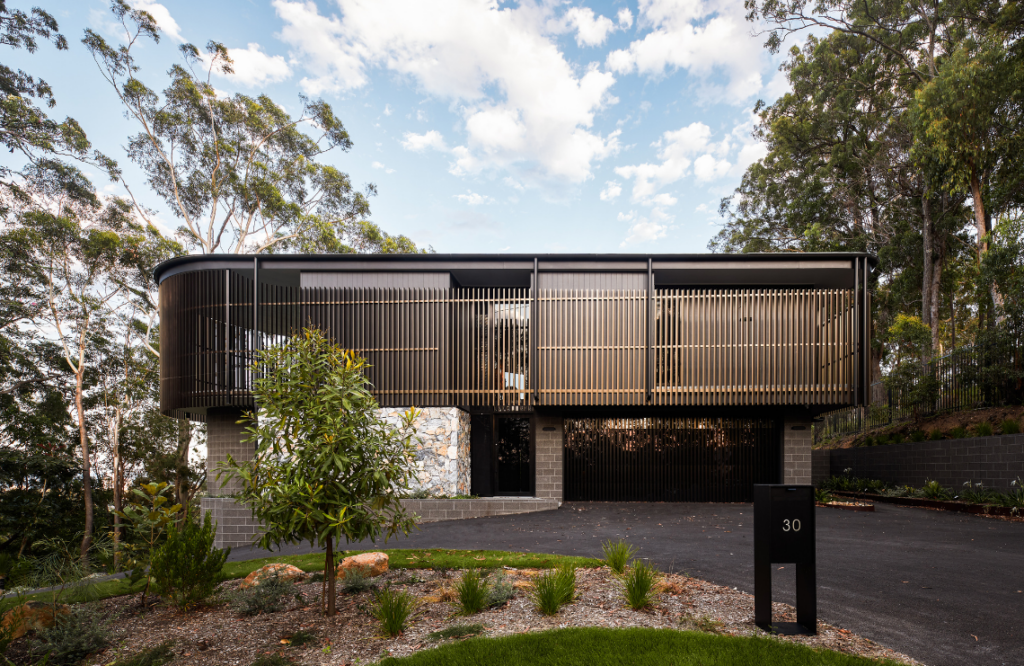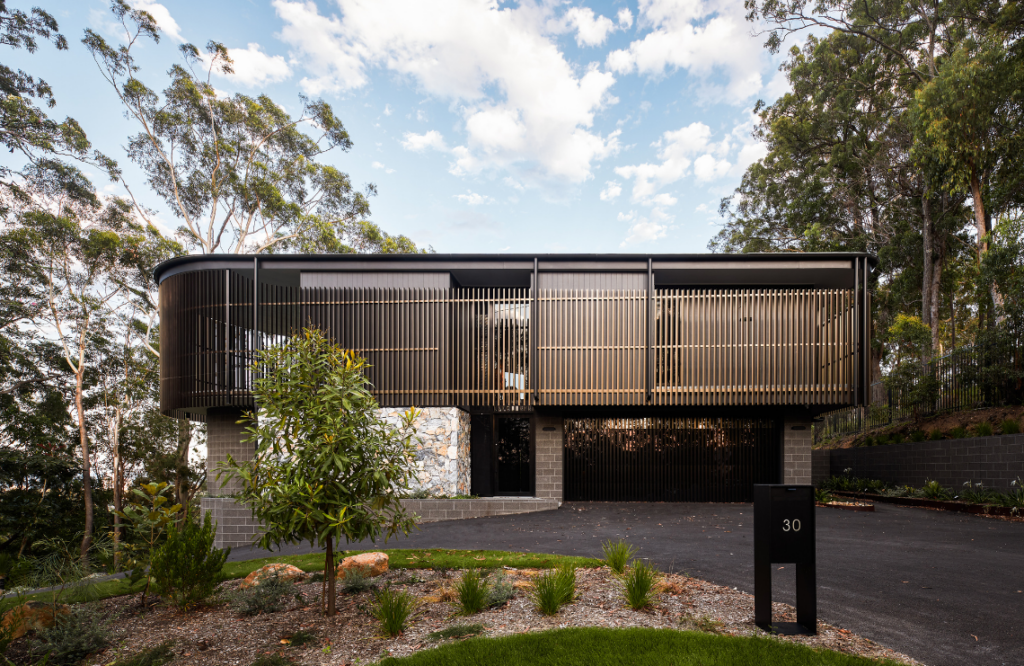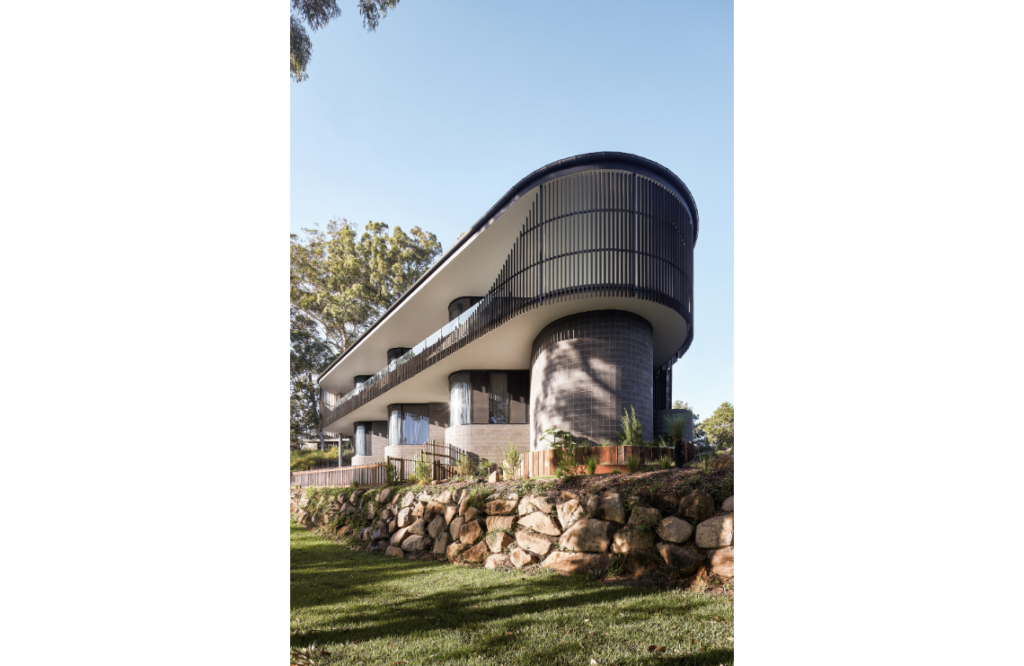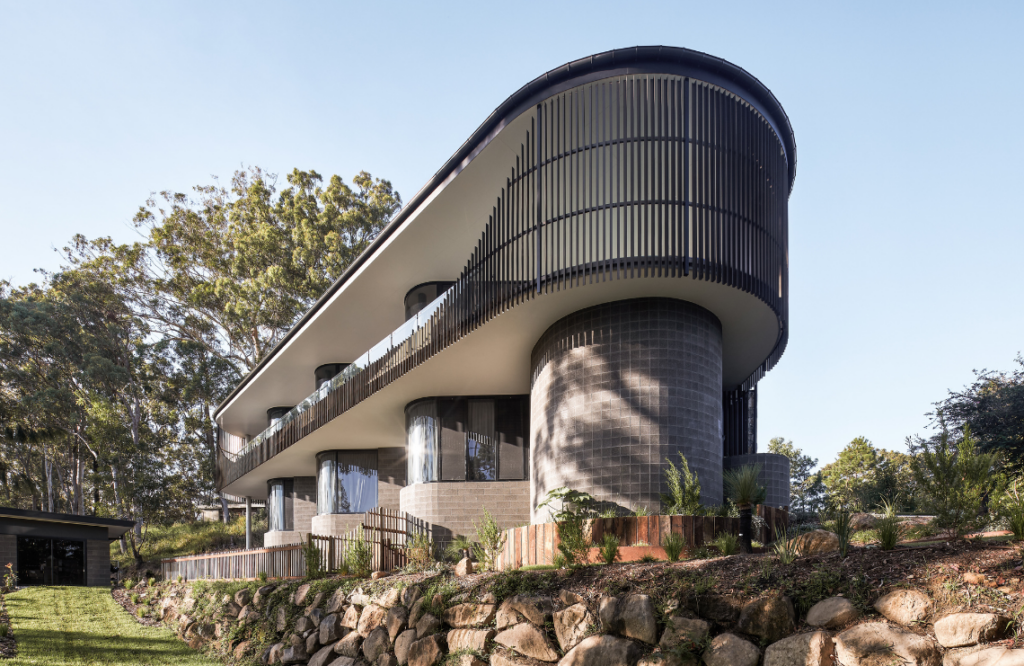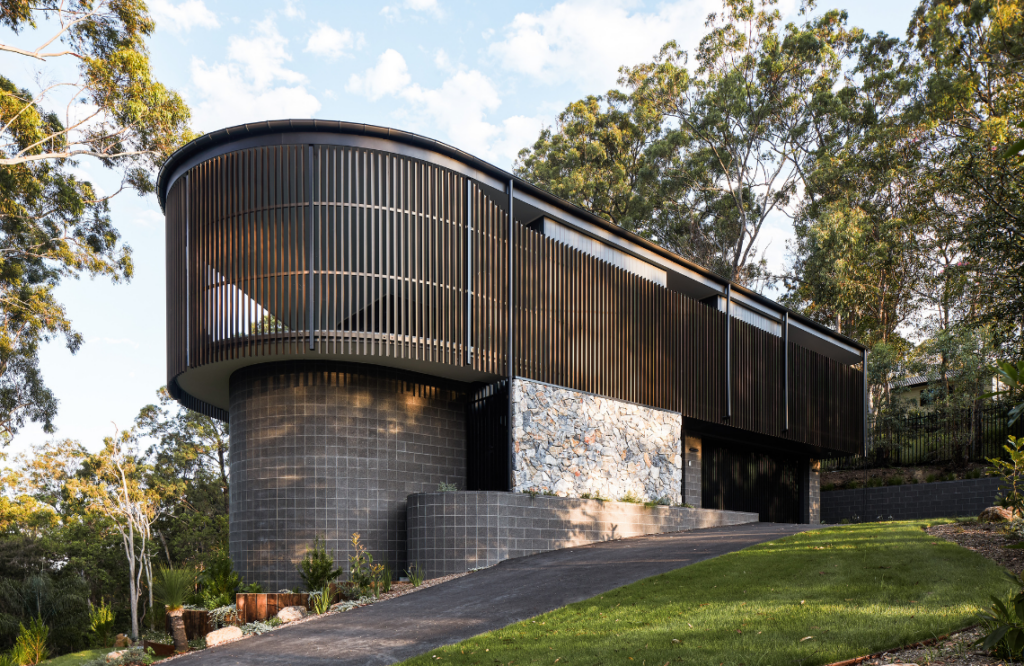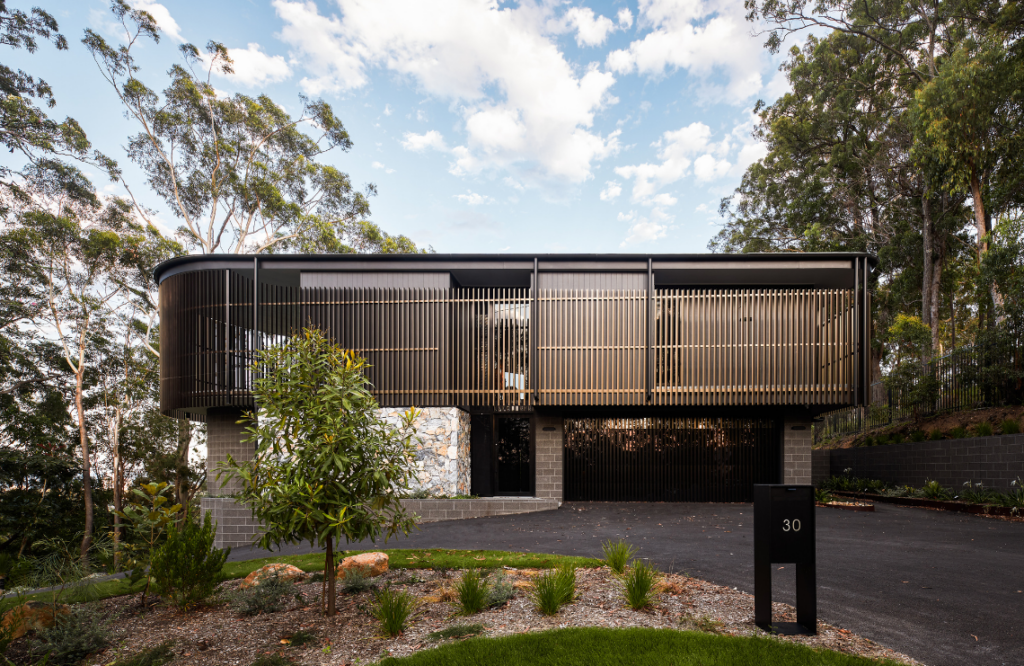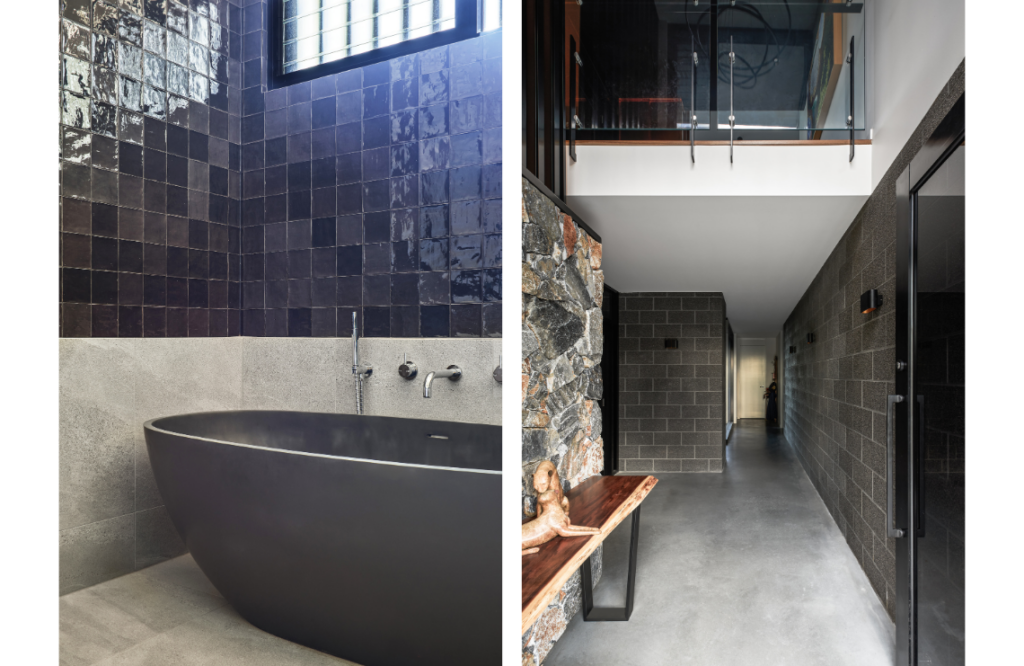

Perched at the rear of the block, on a ridgeline made of lava flow from an extinct volcano, this home is visually compelling. The original dwelling on the site was in a poor state, so it was demolished. With a clear vision to create something extraordinary, architect Paul Uhlmann got to work. “The owners were very keen on a robust and low maintenance house that took advantage of the coastal views,” explains Paul.
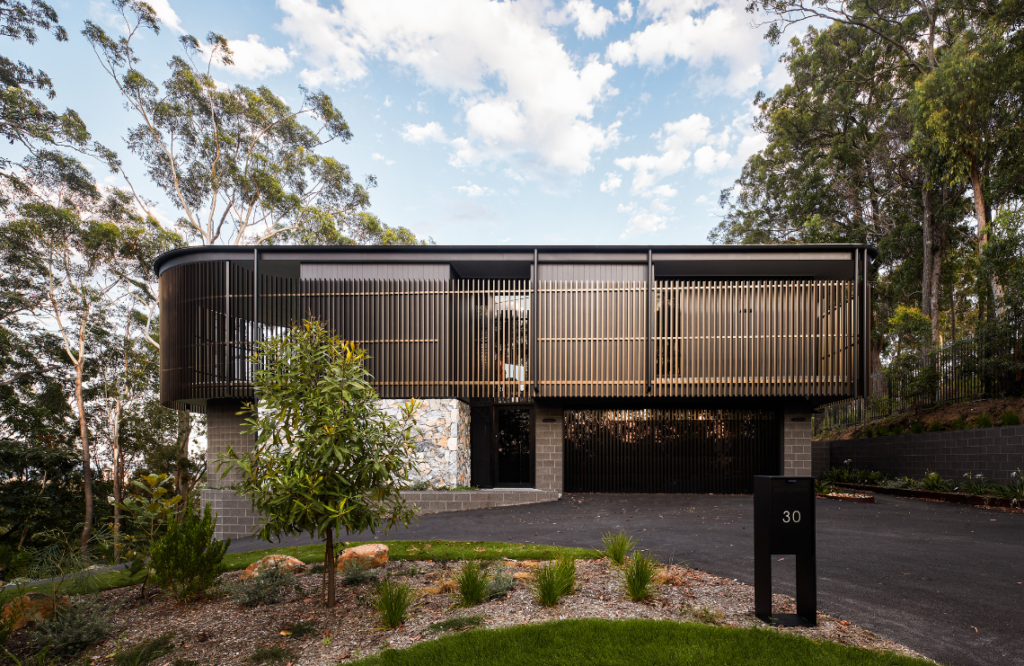
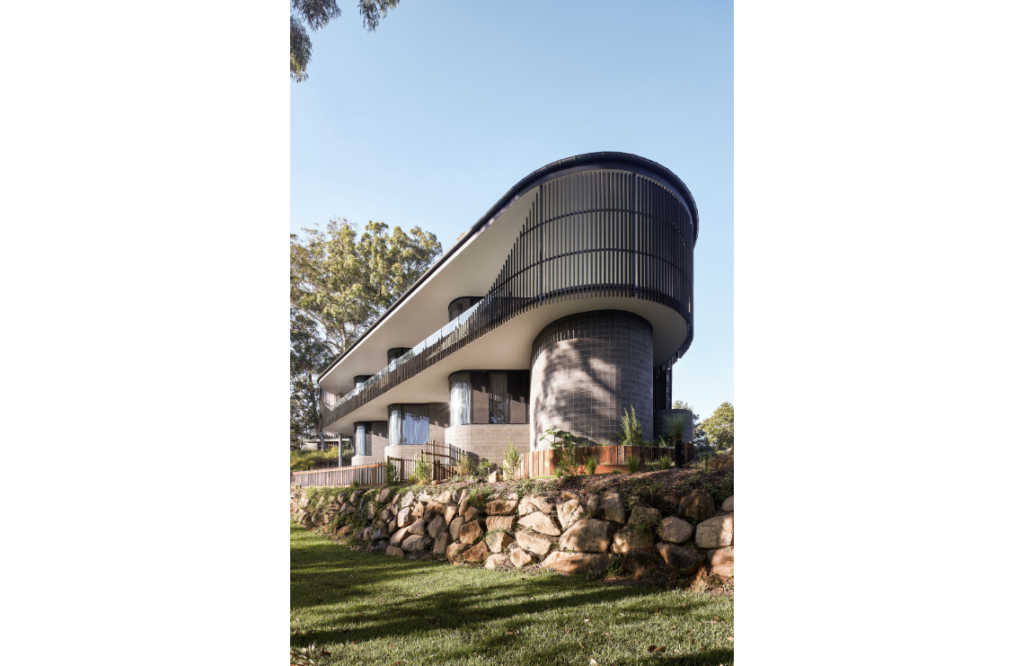
While the existing retaining walls and levels on the site were retained, the new two-storey residence is an artform, a study in good design that works well within the constraints of its position. Given its location, above an open eucalypt forest, the block was subject to bushfire. This meant a BAL 29 bushfire rating applied. “This pushed the selection of external materials towards the use of exposed blockwork as a robust skin that is non-flammable,” says Paul.
“The overall form was then softened with curved forms and glazing to reflect the existing curved landscape forms on the site” — Paul Uhlmann
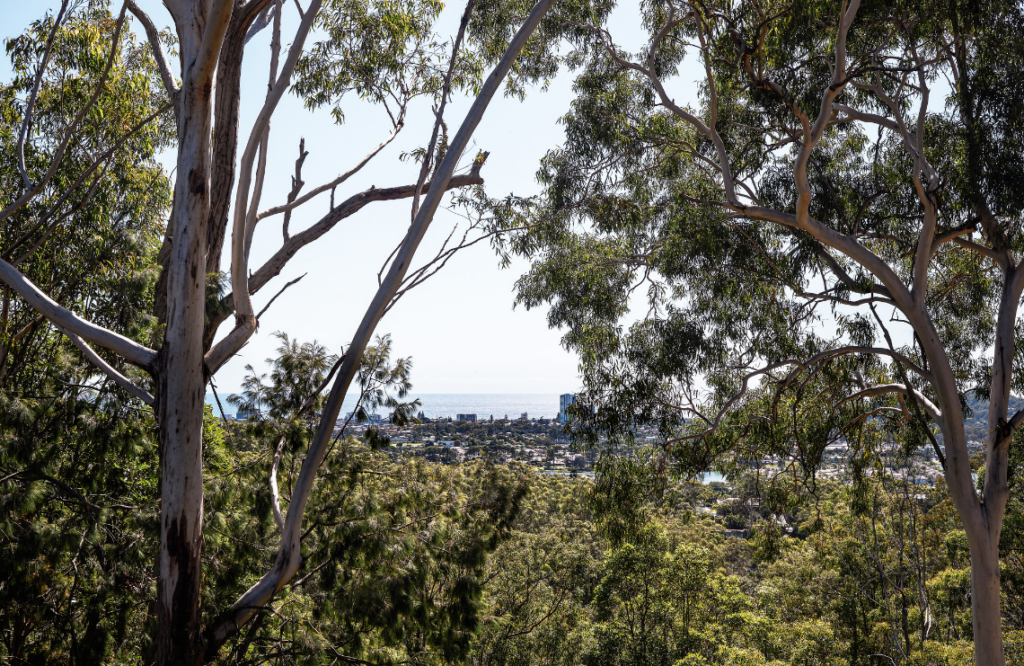
The homeowners, an older couple, were still working and looking at future retirement. From the ridgeline where the home sits, there are distant coastal views to the east. Given the slope of the site and required bushfire setbacks, the home was pushed into the south-west corner. Paul says this was parallel to the existing landscape platforms cut into the site. “The building form became triangular to maximise the northeast orientation, providing benefits for capturing the cooling summer north-east sea breezes, as well as solar orientation for the winter sun for heating,” he says. “The overall form was then softened with curved forms and glazing to reflect the existing curved landscape forms on the site.”
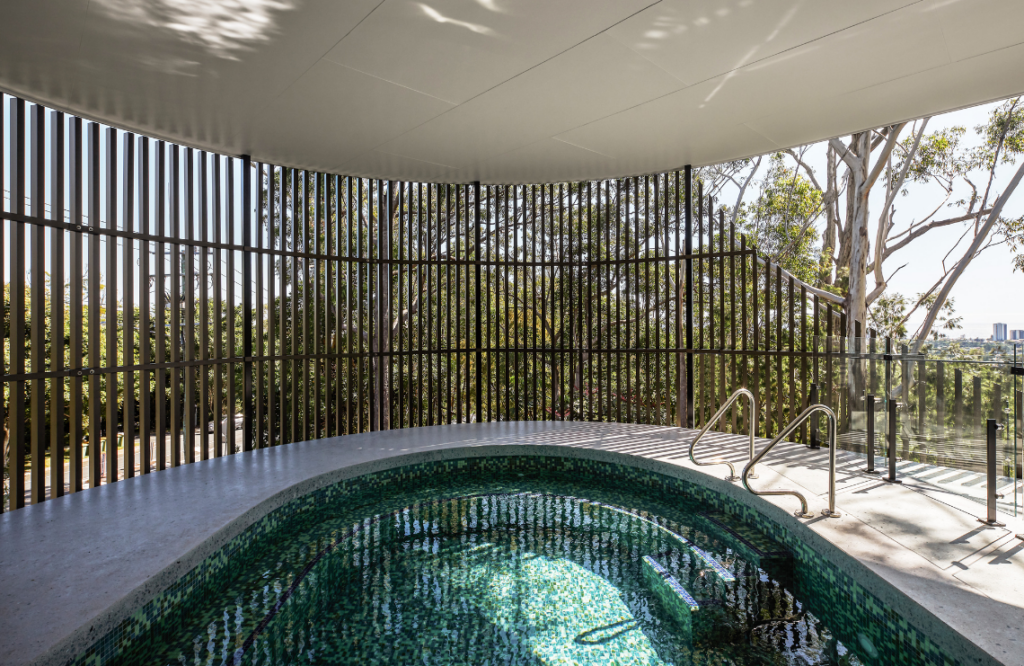
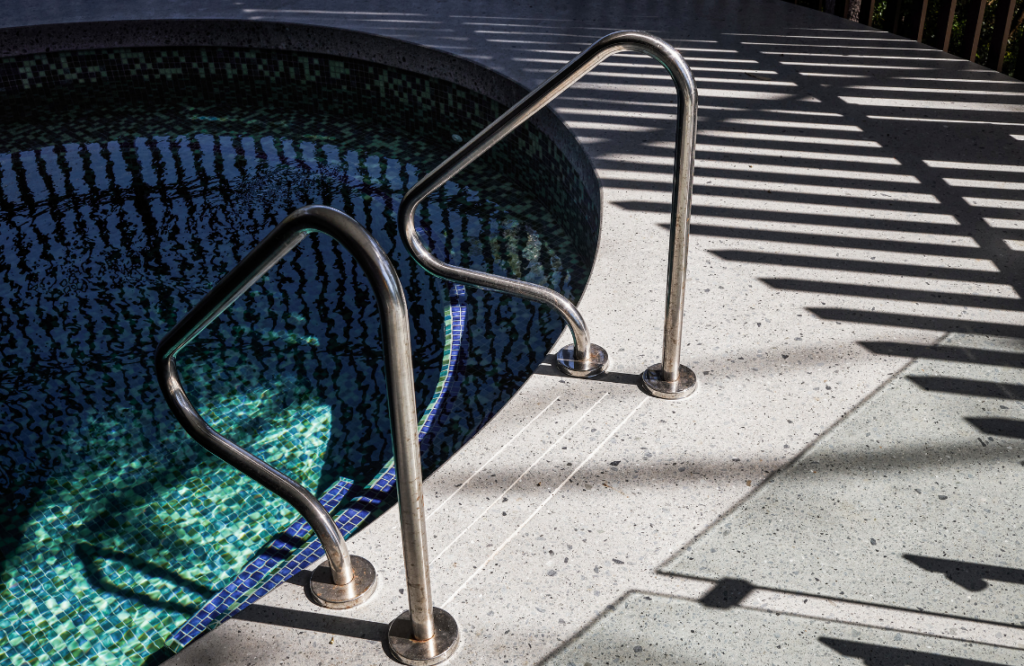
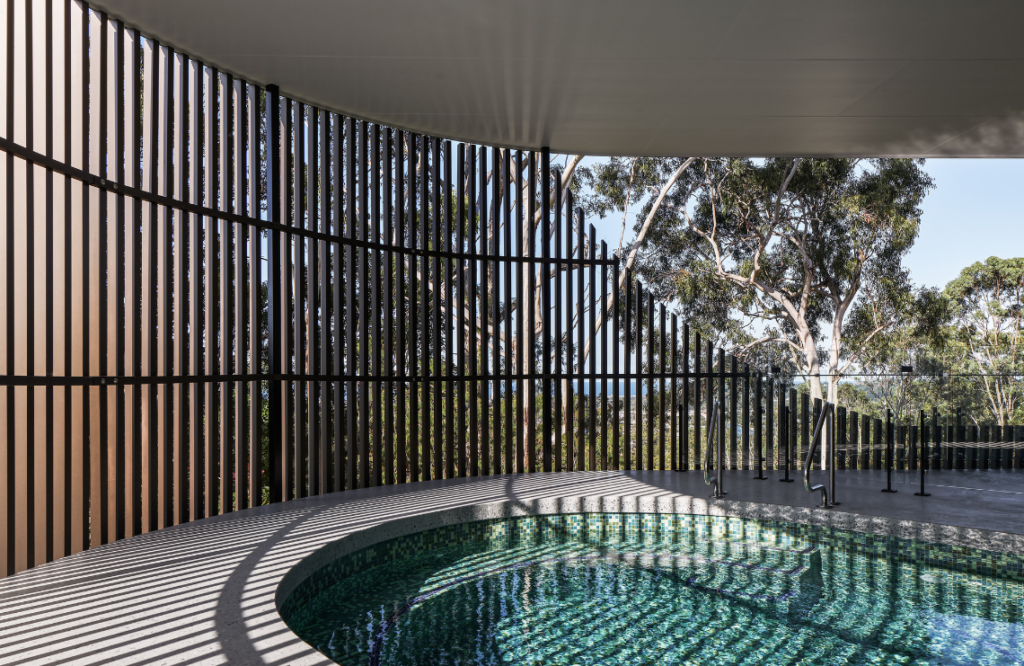
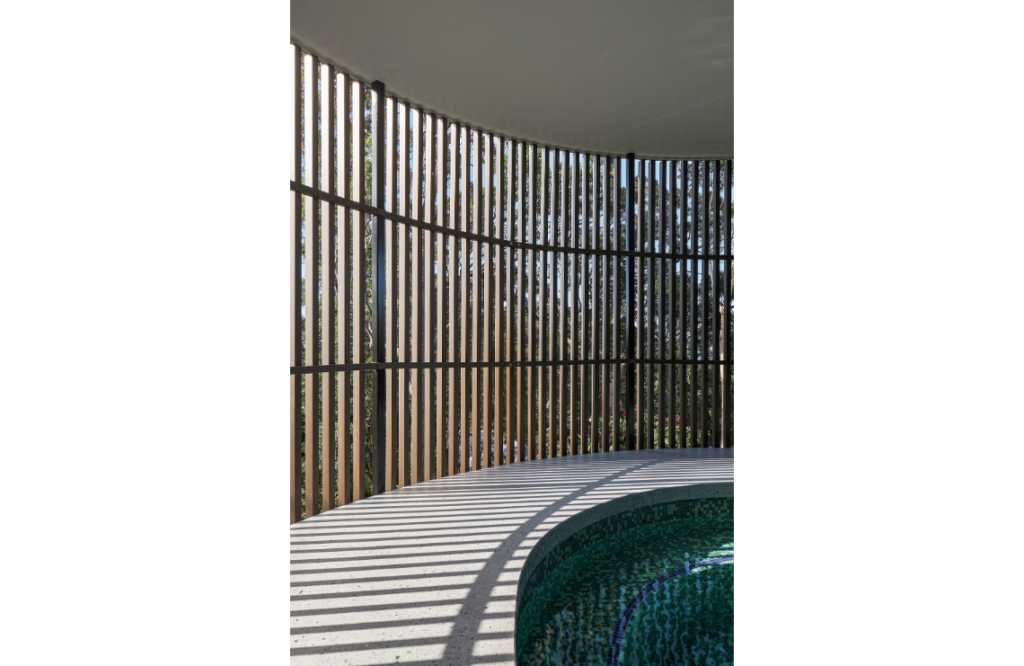
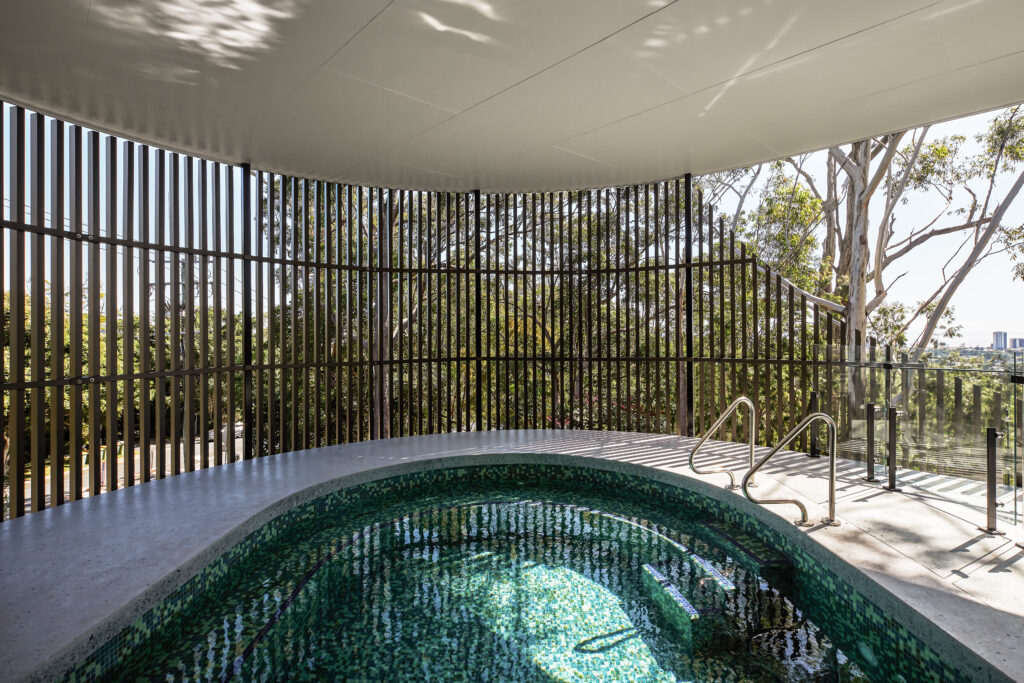
The building form also serves to shield the home from any road noise, and the first floor is the best location to capture the coastal views, so this is where the living areas of the home and the pool were located. It’s a two-storey dwelling complete with art studio for the in-house artist resident. There are three bedrooms, a study, and a self contained living space and bedroom located on the ground floor. This area was intended for a live-in carer if needed in the future. There is also a lift to cater for mobility issues.
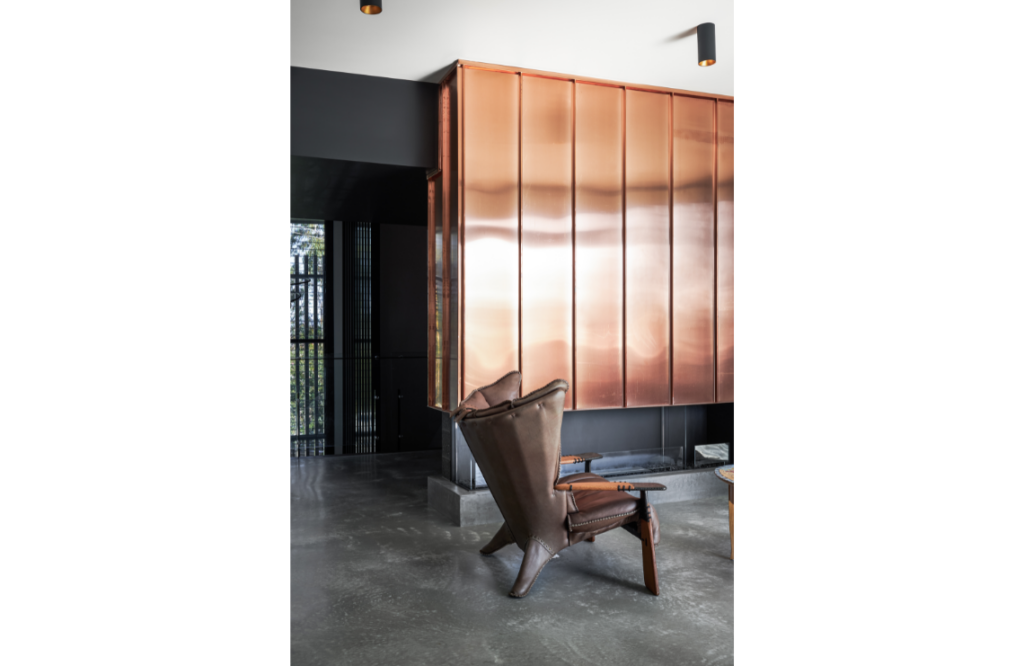
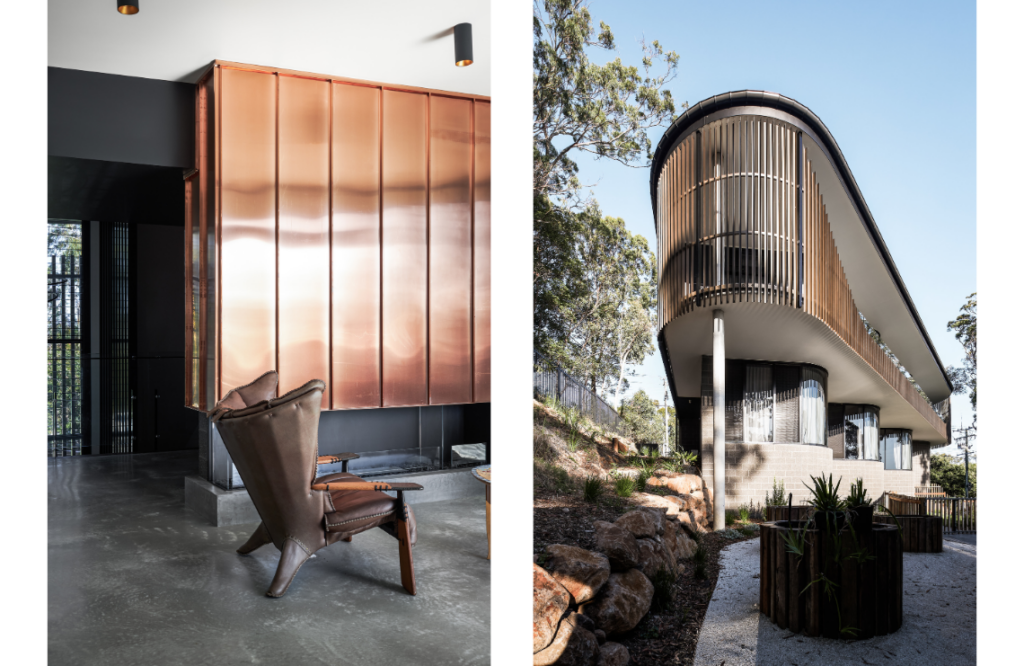
With beautiful native bushland at its doorstep, it’s little wonder the eucalypts became the inspiration for the tonal grey colour scheme. While the exterior is quite grand, inside there’s a different ambience.
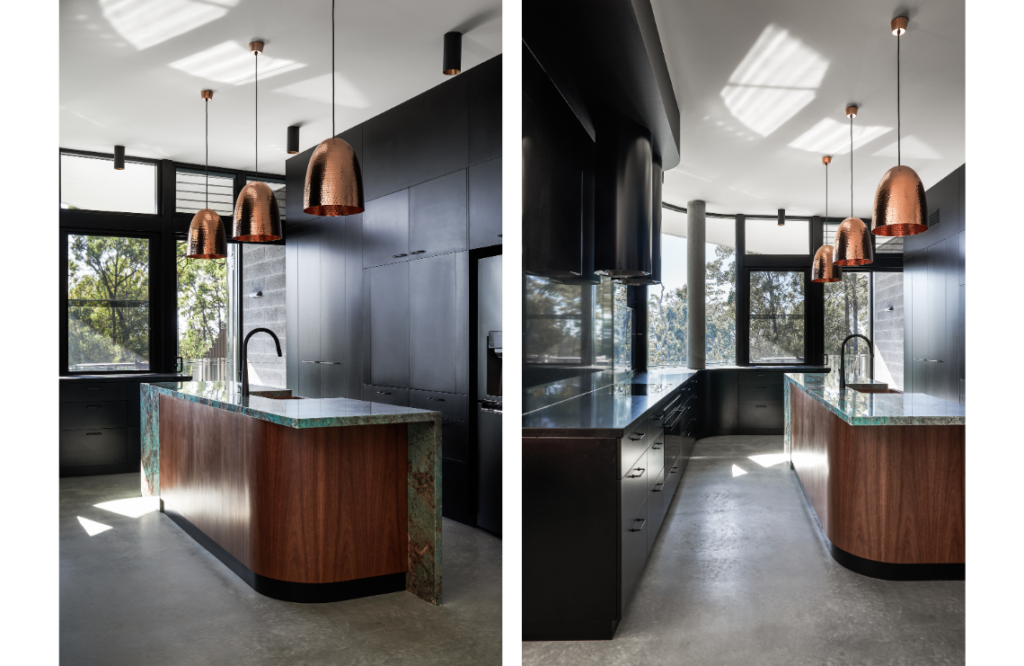
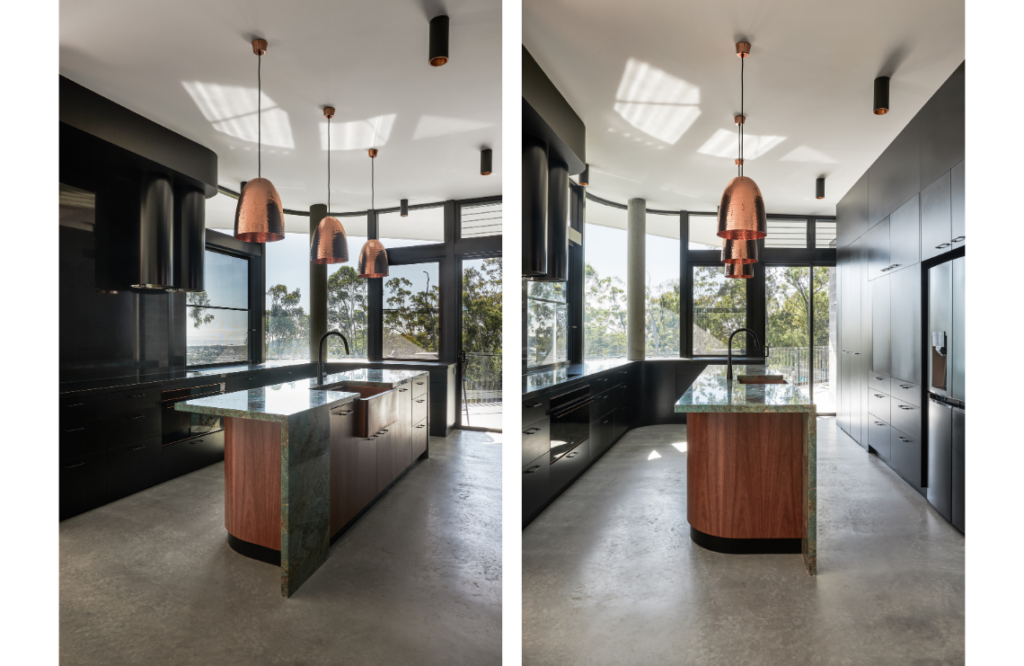
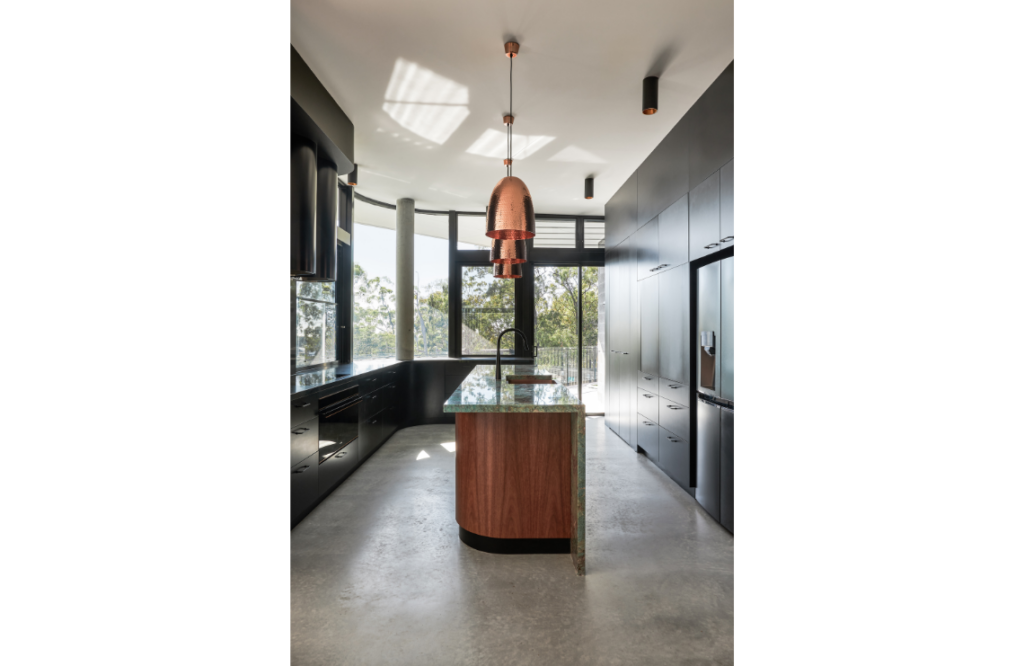
One of Paul’s favourite aspects of the project is the built form; the other is its interiors. “The scale of the internal spaces are quite intimate and relaxing,” he notes. The interiors are refined and beautiful. In the main living space, cool concrete flooring sets the scene. There’s a striking copper fireplace and feature pendant lighting over a stone benchtop.
It’s an eco-friendly build. The longer facade of the building faces to the north-east, allowing for passive cooling. Building materials are low-maintenance, quality materials that will endure. The home also boasts its own sewerage system, underground rainwater tanks, PV panels and a battery system.
This project stands alone and is memorable for many reasons. For Paul, one of them is all about the way the built form responds to the environment. “The triangular planning and the soft external forms which allow the building to nestle within the site makes it special,” he comments. Another standout, he says, is the journey from the ground floor in the glass lift which has a window into the pool. “It’s quite memorable,” he enthuses.