


From the get-go, the focus of this renovation was to deliver a compact, high-performing and efficient home
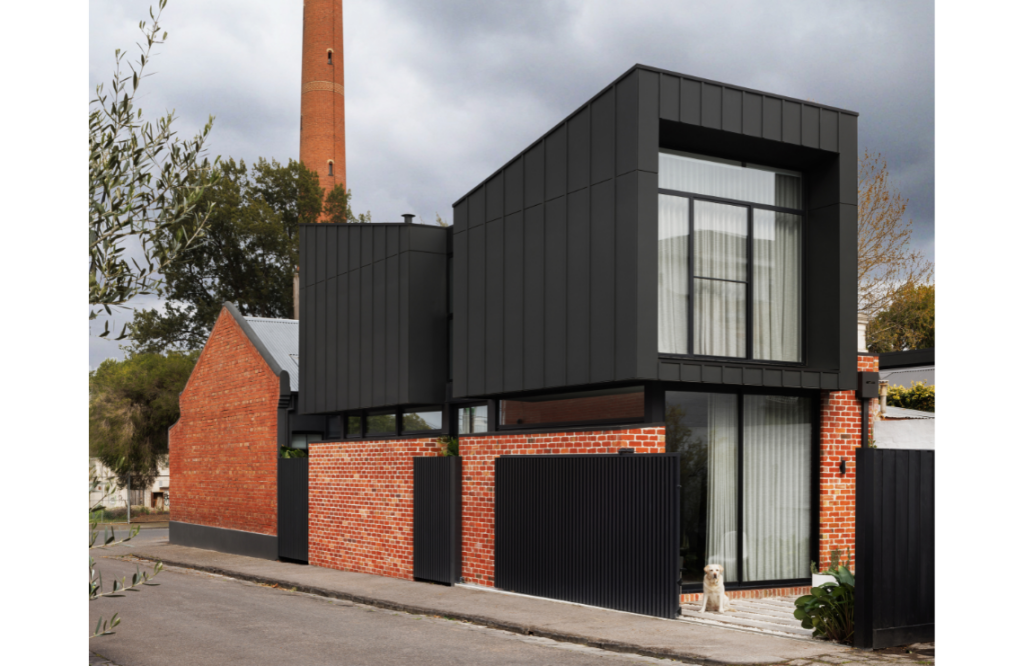
With this inner-city renovation, there was a range of must-haves on the list. Among them, capturing northern light, options to safeguard privacy, and also sourcing ways to harness a sense of connectedness to outdoor spaces. The existing dwelling, a Victorian terrace, was in a state of disrepair. Walking in some spaces was not an exercise for the faint-hearted. Put a foot wrong and you could go right through the rotting floorboards. It had a 1950s kitchen, a lean-to with a toilet and a faint musty smell throughout.
Aydan Doherty from AD By Design could see the potential that could be unlocked in its enviable location. “Despite all this, the corner site and northern orientation offered enormous design potential — a chance to reimagine the home with light, volume and presence,” he says. The homeowners were looking for a family home that sympathised with the quaint Victorian era, but also offered opportunity to create a generous contemporary extension to the rear.
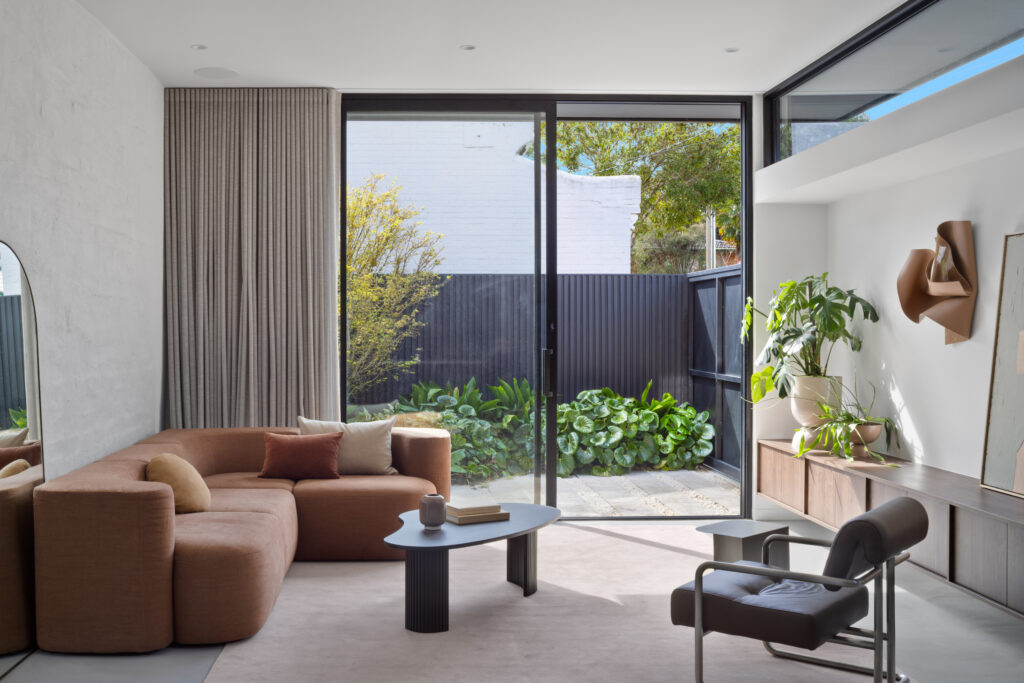
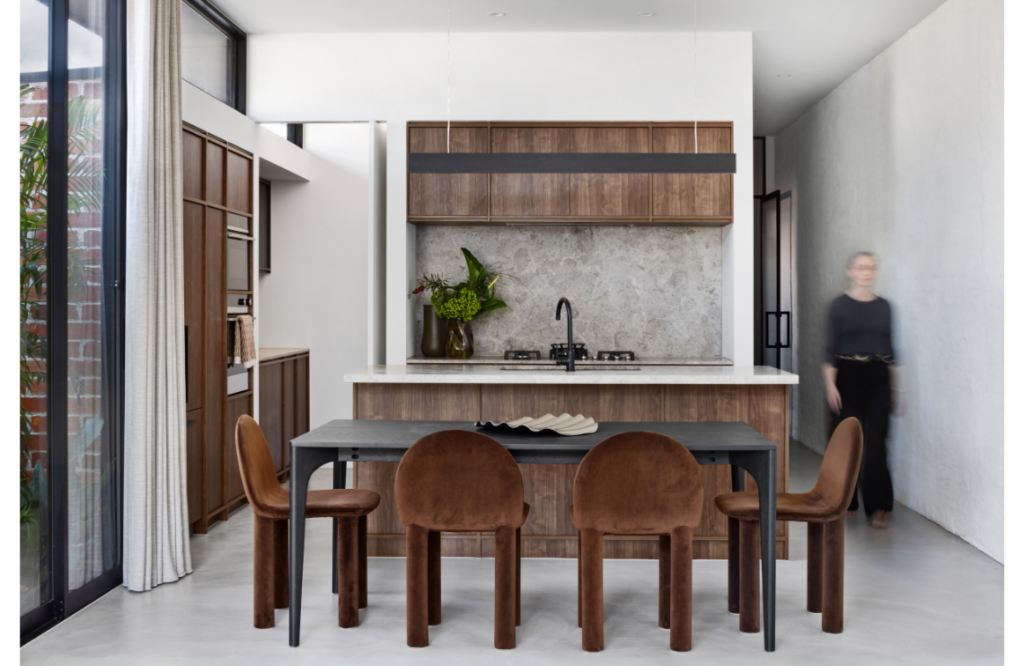
“Materials such as blockwork, black metal cladding, and walnut joinery reflected their desire for a bold, contemporary contrast to the period front,” says Aydan.
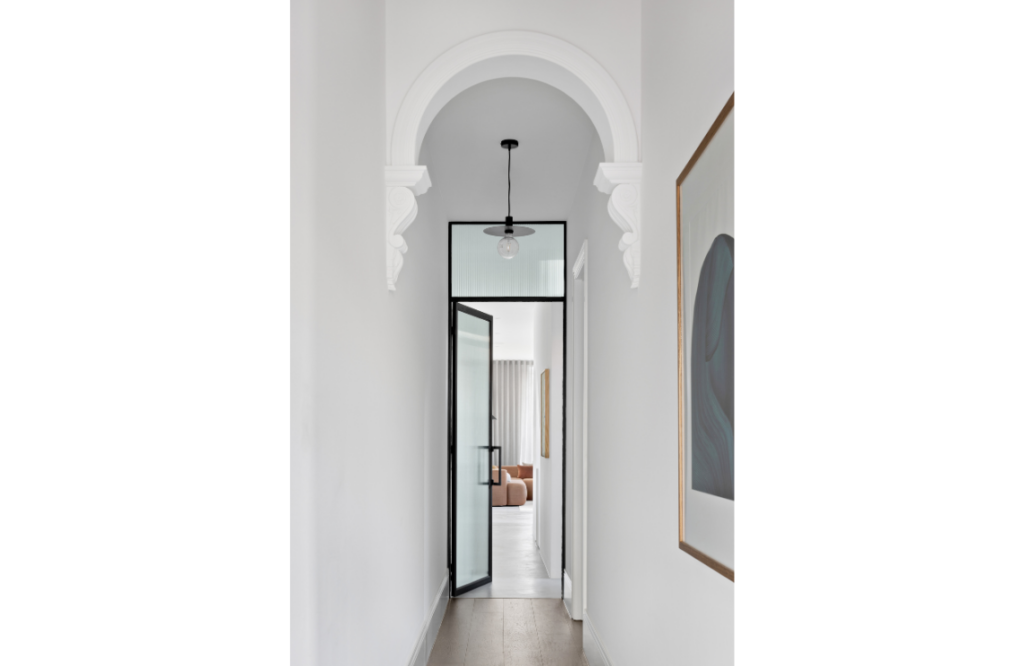
The two front heritage rooms were revitalised with new flooring, lighting and other finishes. Cost-conscious decisions also weighed into the planning and execution of the project. The owner, a builder, intended to do the construction himself. Aydan took on the challenge of delivering all of these elements, serving up a home that’s a unique architectural expression of form and function.
He’s aptly ticked all the boxes, and more. He says the project was all about creating a long-term, design-led primary residence that balanced heritage charm with modern functionality. “It was about creating a calm, refined and durable home suited to a couple living in Melbourne’s inner north — a place to live with intention, not excess,” he explains.
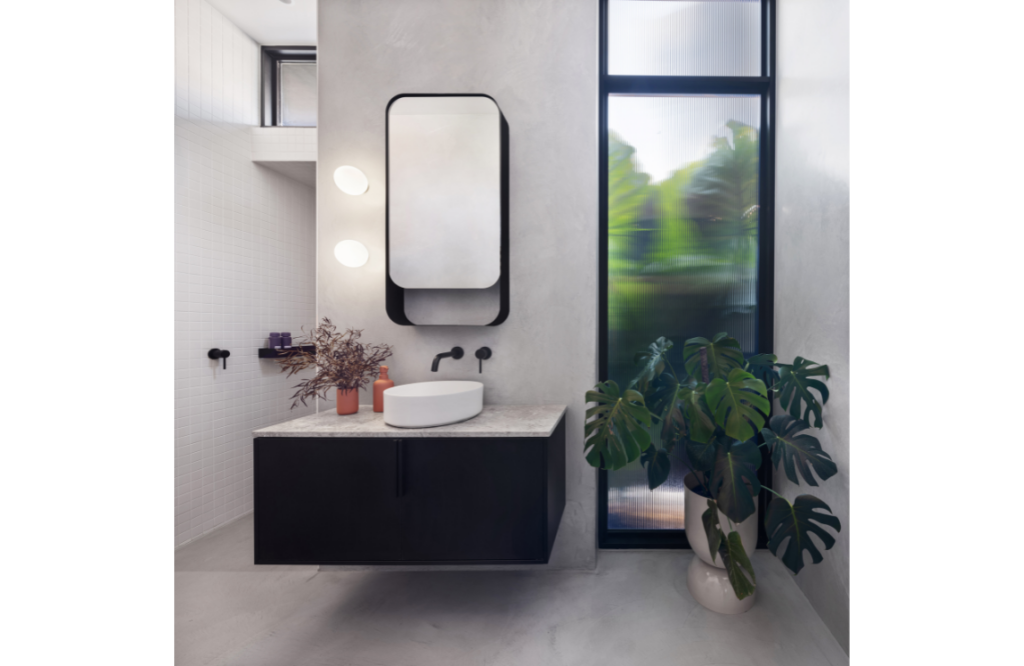
The homeowners are a couple in their mid-30s, so design flexibility was important as their needs change over time. The new double-storey addition has a modern open-plan kitchen, spacious living and dining area. With space at a premium, the compact rear courtyard also cleverly functions as a car space. The master suite upstairs has a walk-in robe and an ensuite.
How do you design a home that offers privacy, and welcomes in light, in a tight inner-city locale? The answer was to create a ‘floating’ upper level, says Aydan. “It had a band of high-level windows that flood the ground floor with light while protecting privacy,” he explains.
As you move from the original rooms into the modern extension, you can see the design intent to create an obvious contrast between old and new. Aydan says materials and form drew from leading local projects. “With references to work by Ritz and Ghougassian, Pleysier Perkins and Tom Robertson Architects,” he says. “The use of blockwork, dark cladding, and expressed detailing helped create a calm, textured and contemporary feel.”
Cost-cutting measures have not impacted the quality of the final product. Cement cladding was used in place of standing steam metal on the upper level. Where possible, reclaimed materials were also used. The base of the home is constructed from recycled red bricks, which were sourced locally from the original Clifton Hill quarry.
Other eco-friendly measures include north-facing glazing with deep eaves and high-level windows, thermal mass with concrete floors and brickwork, as well as high-performance insulation and rainwater tanks. Aydan says environmental performance was a key consideration. The result is a compact, efficient home that performs well and will continue to do so for decades.
“It was about creating a calm, refined and durable home suited to a couple living in Melbourne’s inner north — a place to live with intention, not excess”— Aydan Doherty


