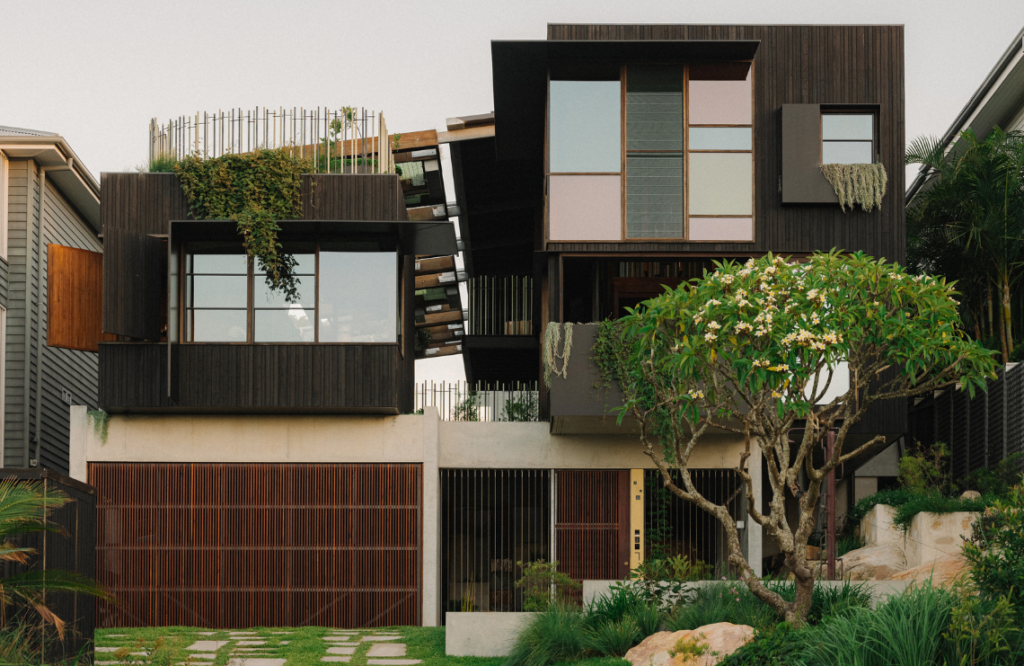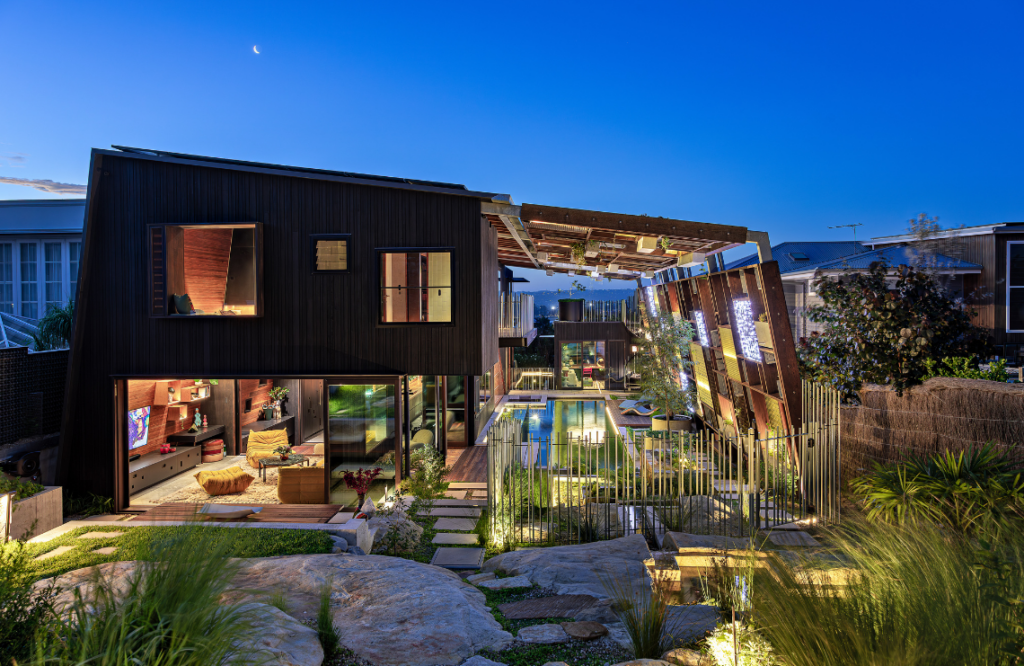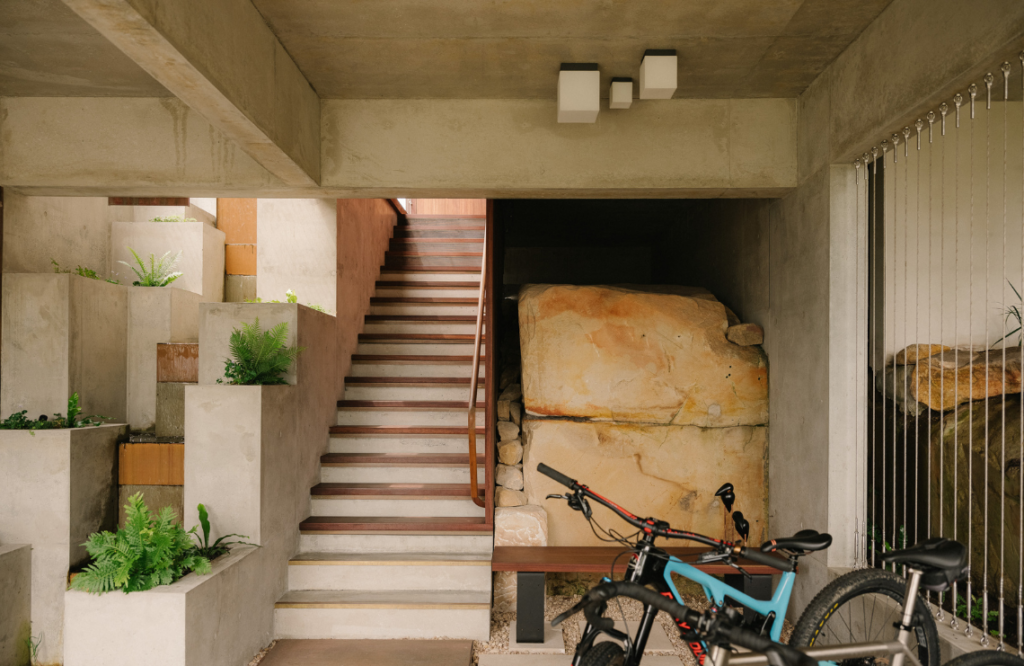

This eco-friendly home is abode. It’s on a pristine parcel of land with ocean views, a coastal heath, and a national park on its doorstep.
The homeowners are a young couple with two small children, and three chickens who have come to roost in this beachside haven. Clinton Cole, director of CplusC Architects + Builders, says the clients’ vision was a home that was private, while maximising views in all directions. It also needed to be breathable, private and toxin-free.
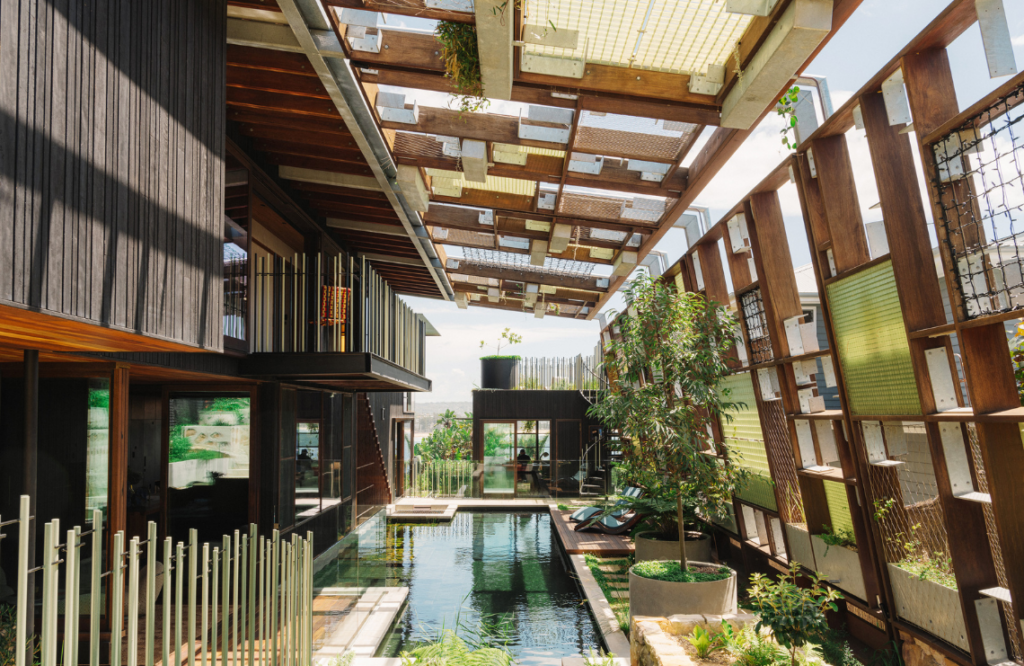
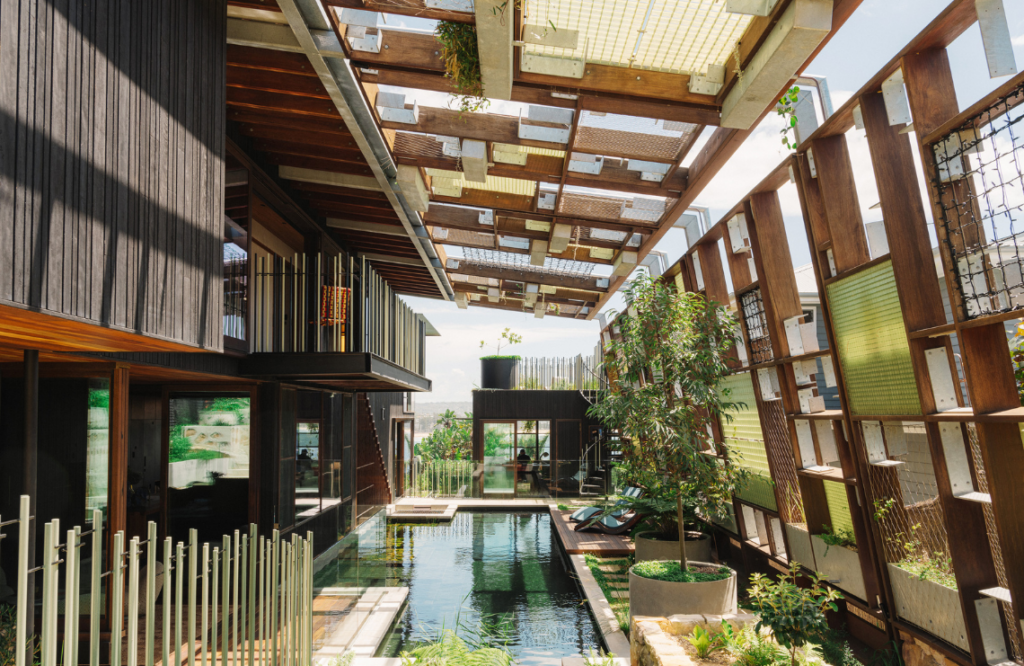
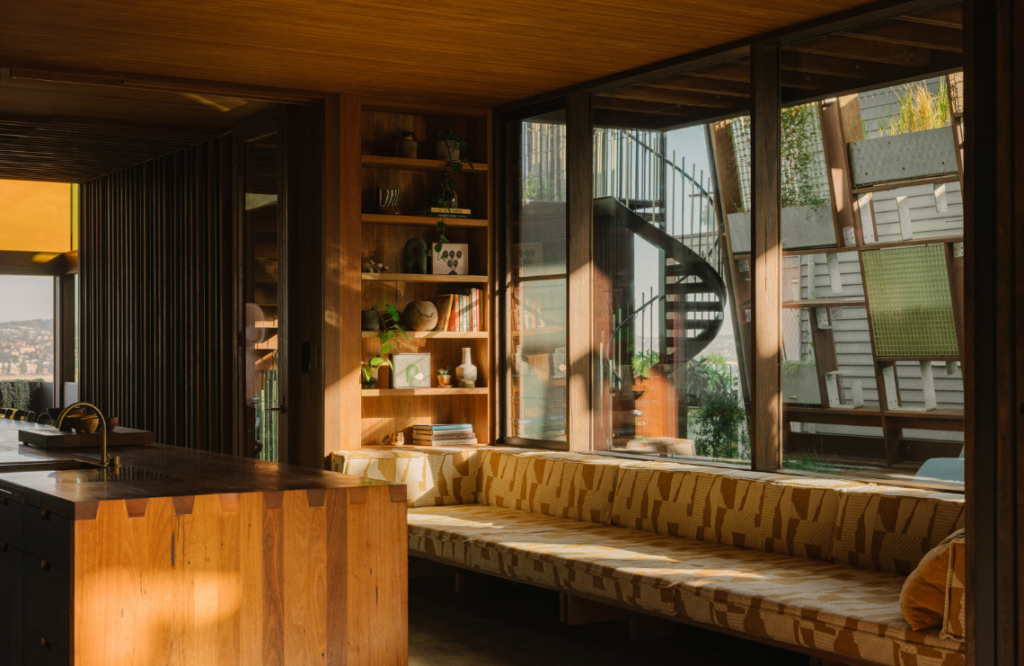
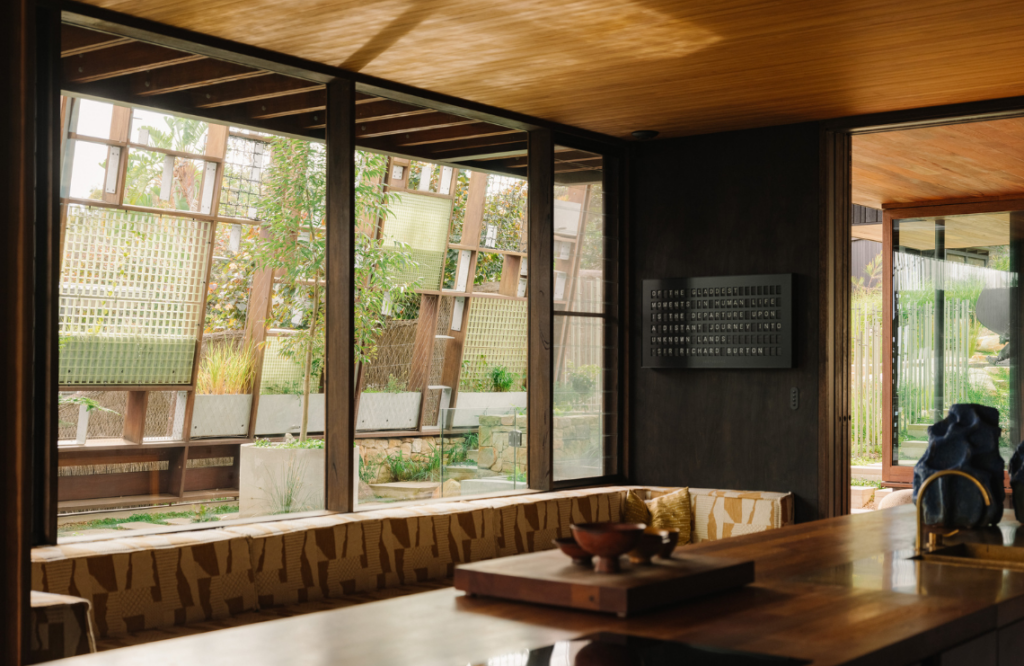
There’s an abundance of colour and texture in the uniquely crafted panels that offer privacy and visual interest
“When we asked the clients how they wanted the house to feel, they told us about walking knee deep through Eli Creek on K’gari. Light bouncing off the water. Leaves dancing off the top of the trees. How can you not get excited?” he says.
Clinton says the owners were also passionate about sustainability. “We imagined a beautiful carbon-positive house that inspires others,” they informed us. “Their goal was for their home to generate more energy by 2050 than was used to create and operate it.”
This was a challenge not to be taken lightly, but CplusC Architects + Builders was more than up to the task. Holocene House has earned Australia’s first Active House certification and is extremely comfortable and liveable.
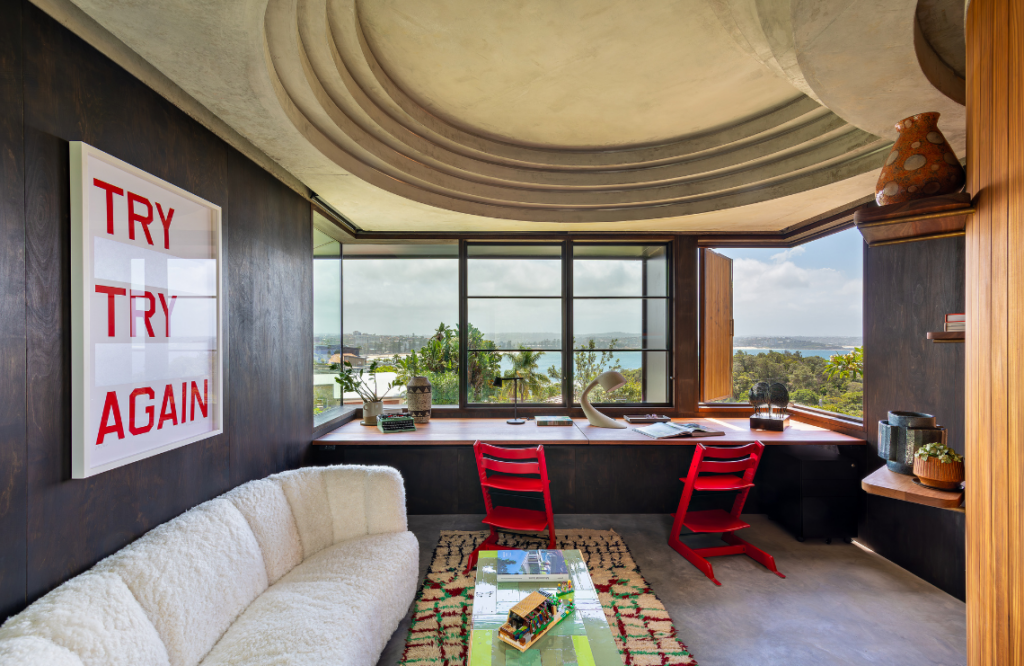
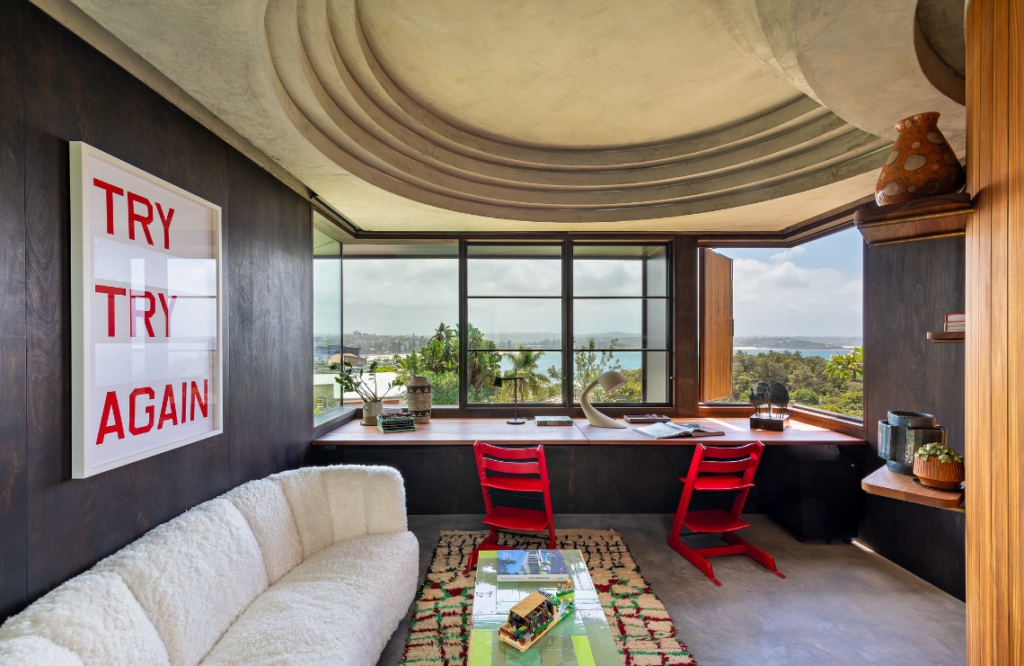
A curved ceiling is a work of art, it draws the eye in this workspace
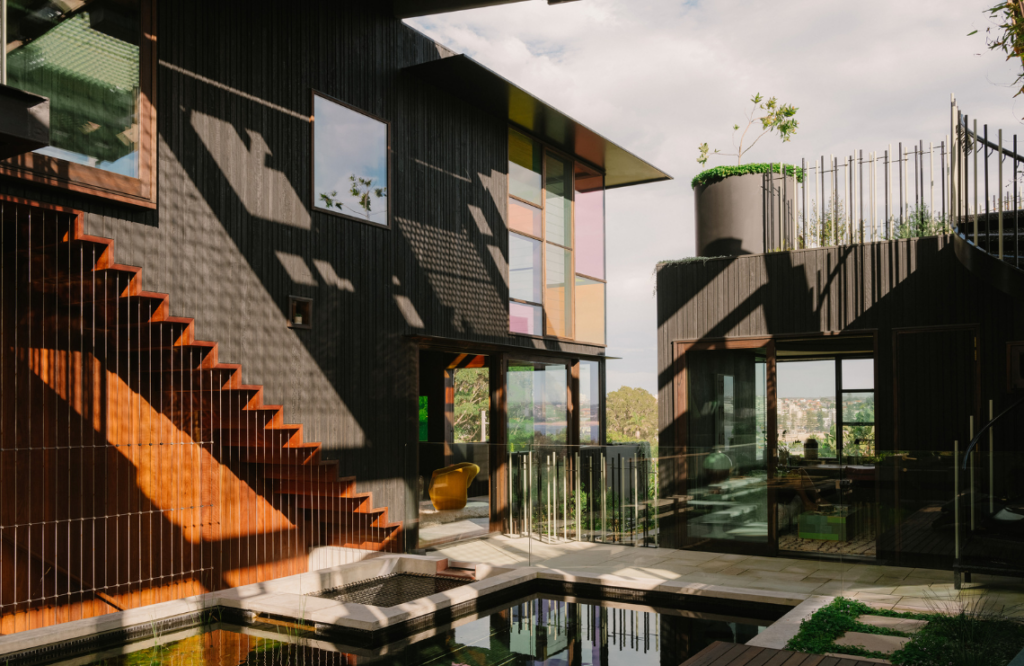
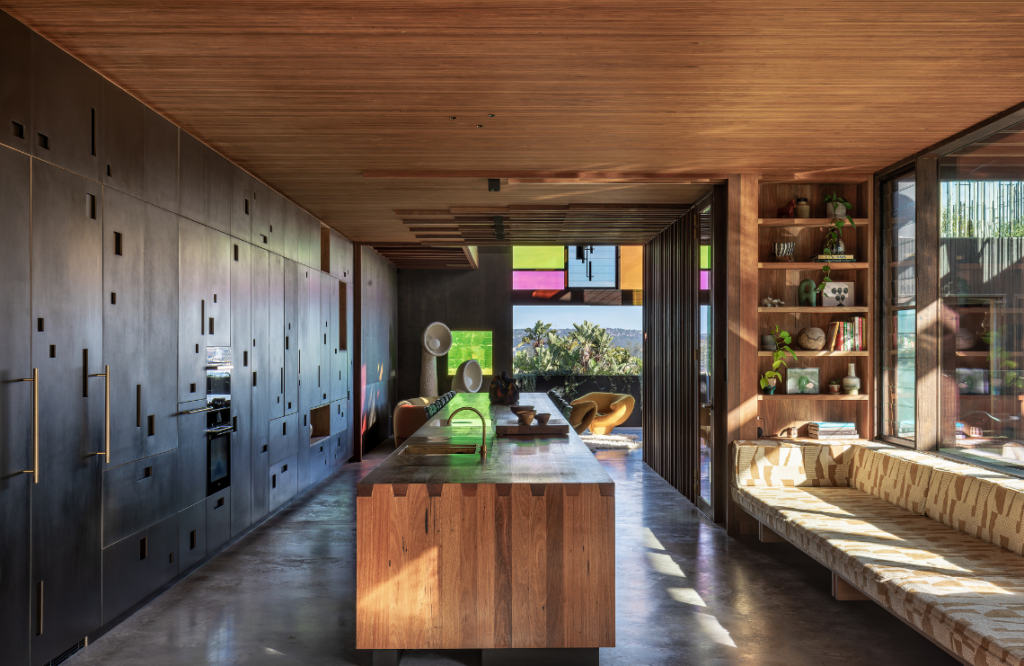
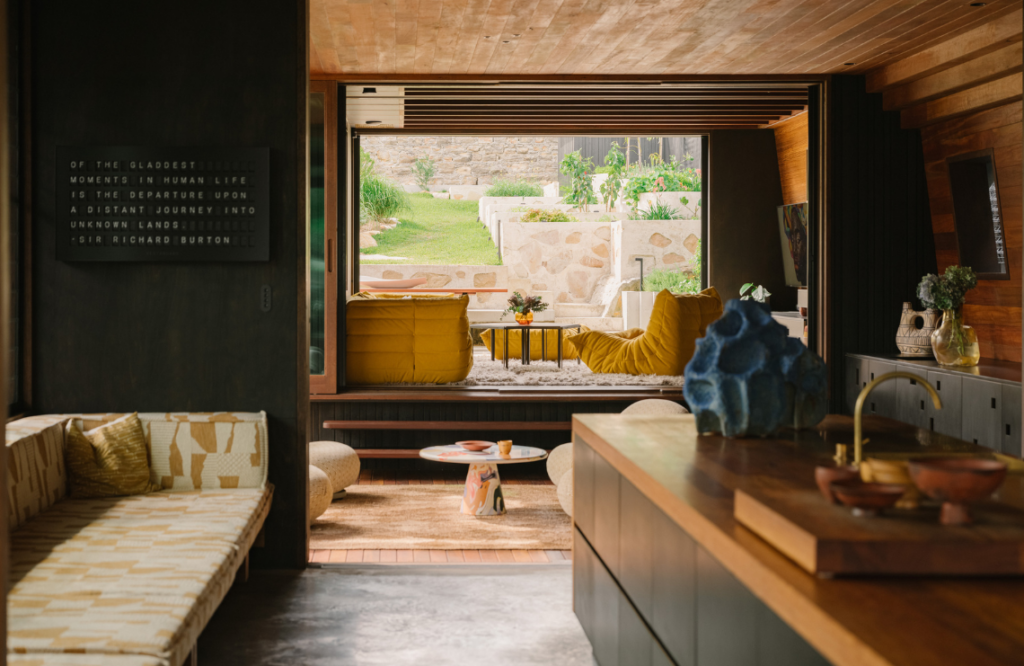
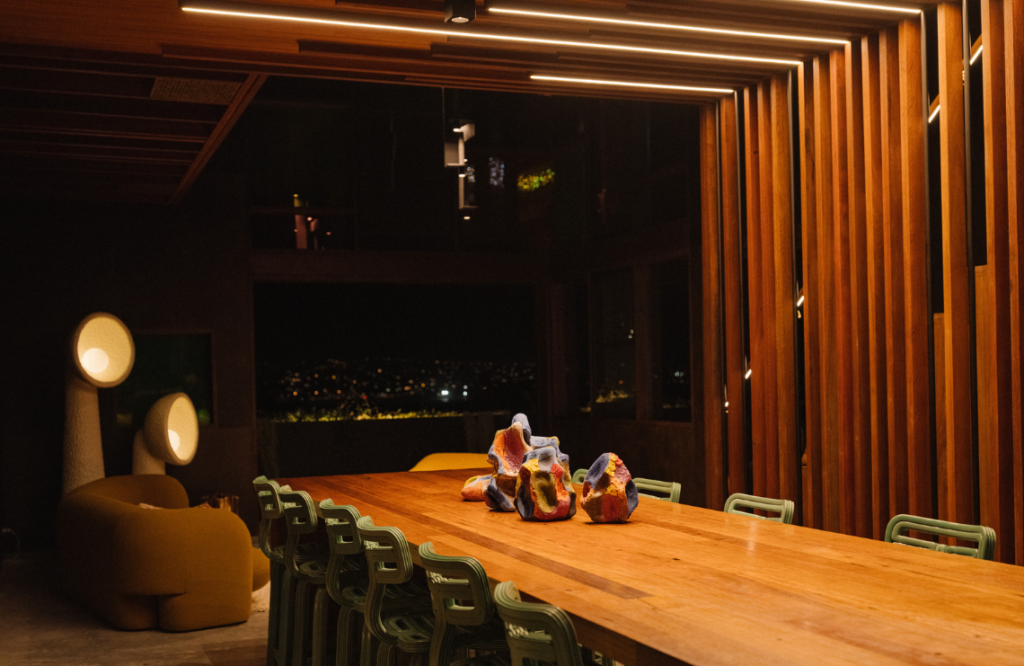
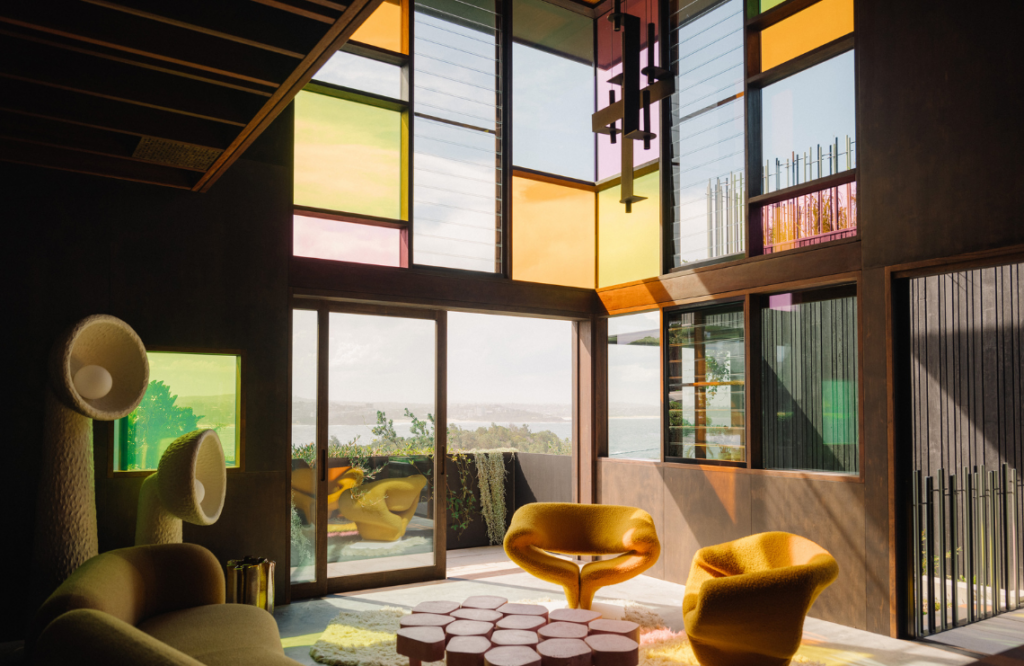
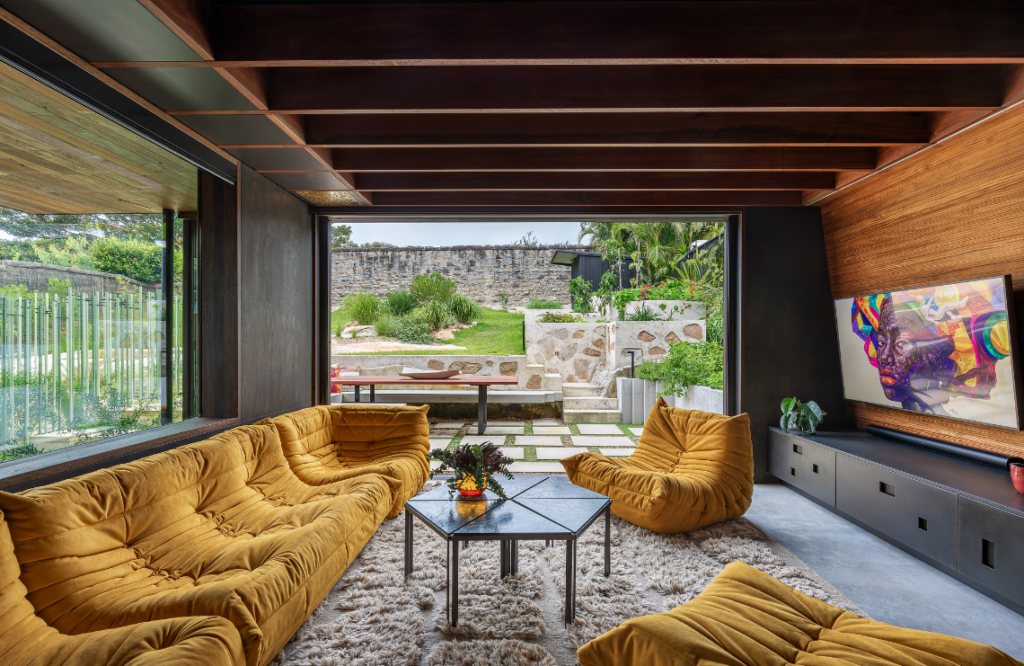
Indoor spaces are warm and welcoming, filled with sunshine and dappled light that plays on the coloured glass. The colour palette is a melody of dark timbers with metal accents. Furniture and decor in lighter, brighter hues lift the internal spaces.
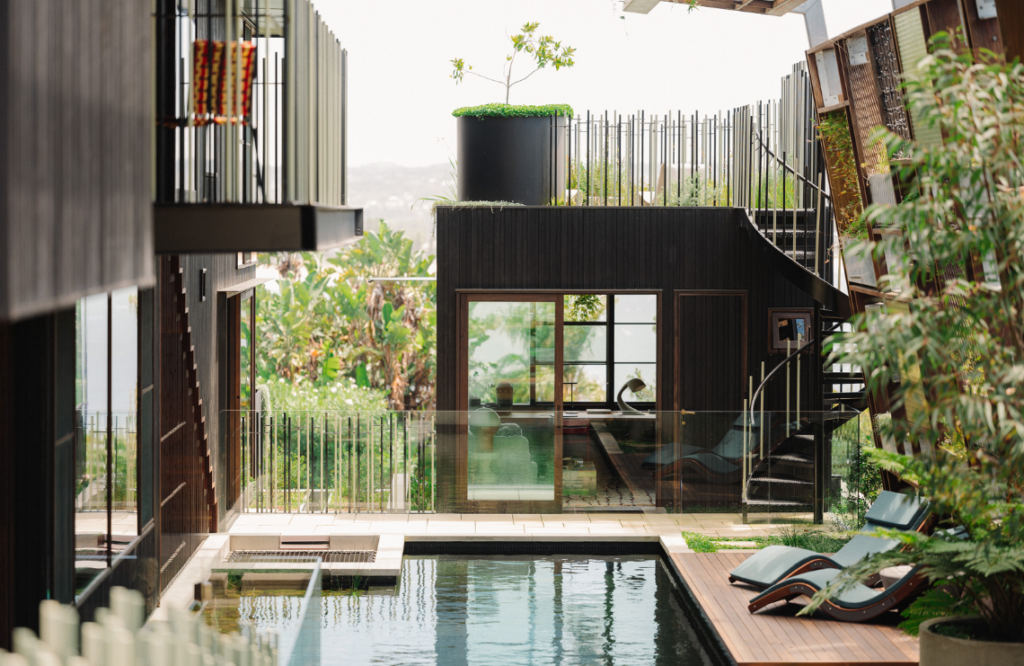
“In their off-grid sanctuary, they can grow their own food, read a book in a hammock, and supervise their kids from all living spaces around the low-maintenance natural freshwater swimming pool — plus go cycling or surfing whenever they want,” enthuses Clinton.
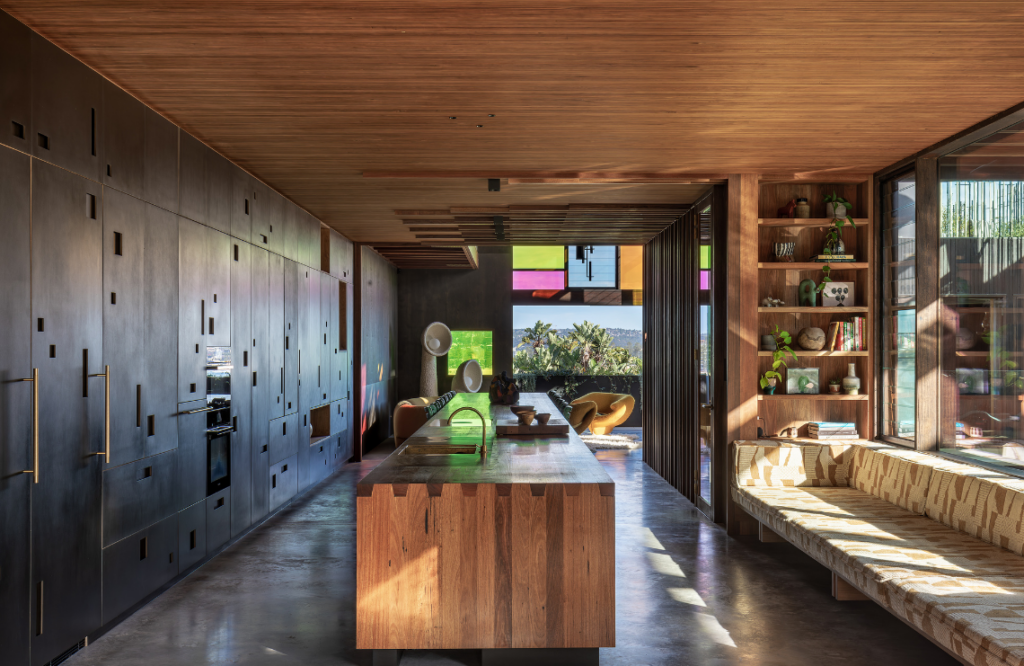
The holistic nature of the project that more than ably delivers a highly sustainable and regenerative architecturally designed home
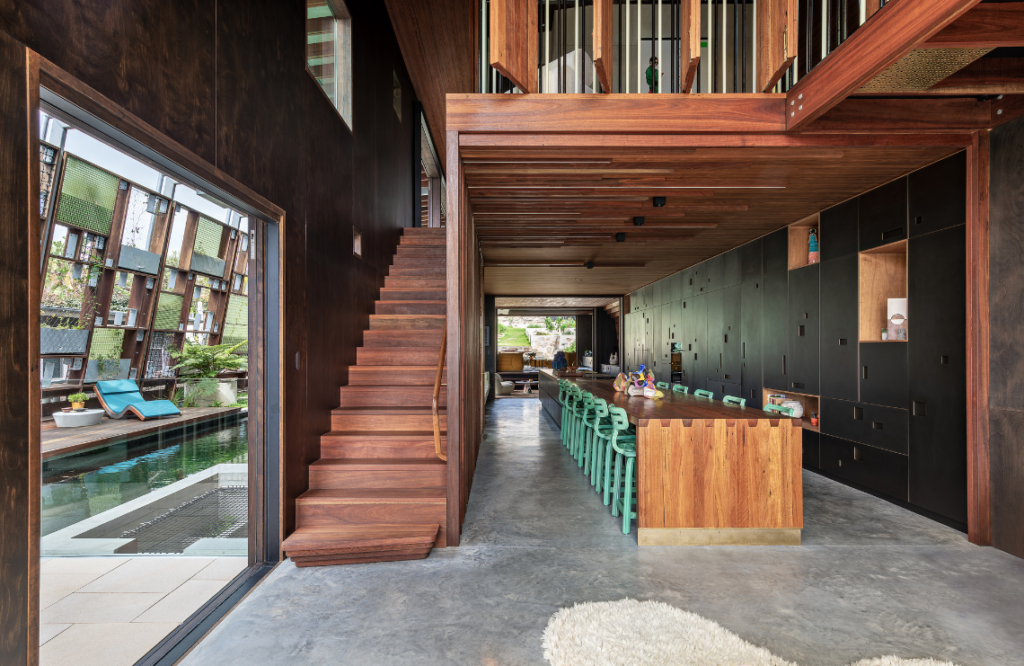
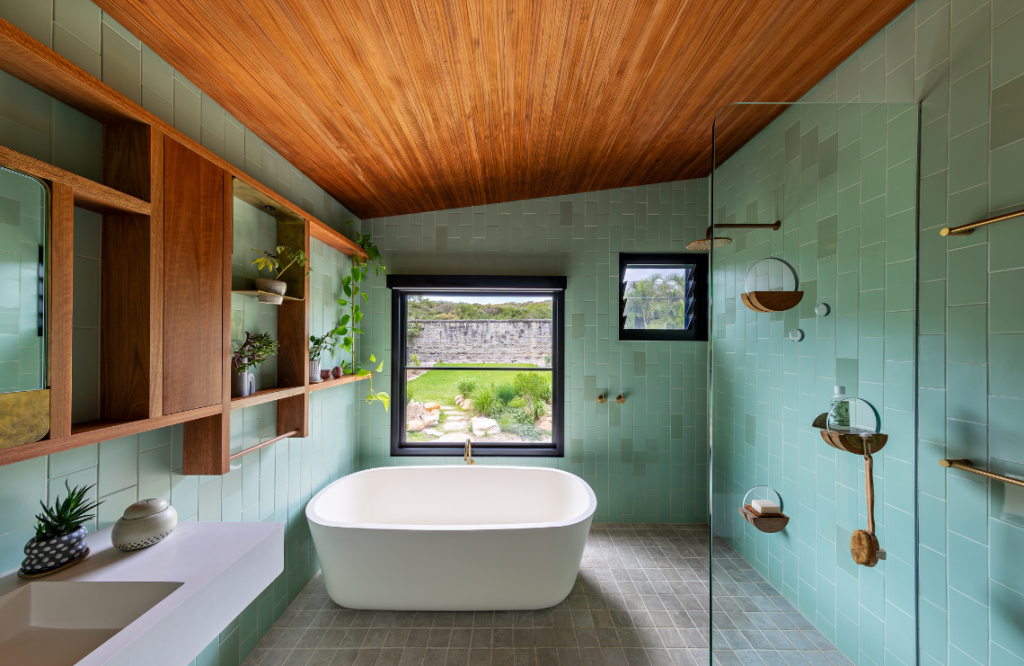
The home comprises four bedrooms, three-and-a-half bathrooms, a home office, a kitchen, a living room, dining, and an art room. There’s also a rooftop garden, vegetable garden, chicken coup, reading area and outdoor dining space. The natural swimming pool is a leafy oasis of calm; close your eyes for a moment and you can imagine you are in a cool rainforest. Clinton says the owners wanted a natural pool and this became the heart of the concept. “Water cascades from natural landforms at the rear of the home, running like a rainforest creek between dramatic living spaces and an expansive outdoor deck,” he says.
The project encountered its share of difficulties, including delays and stock shortages due to the COVID-19 pandemic, as well as volatile weather patterns with storms and torrential rain. The site was flooded a few times and materials that were stockpiled were swept away. As a result, the entire stormwater management plan was re-jigged and the landscape design changed.
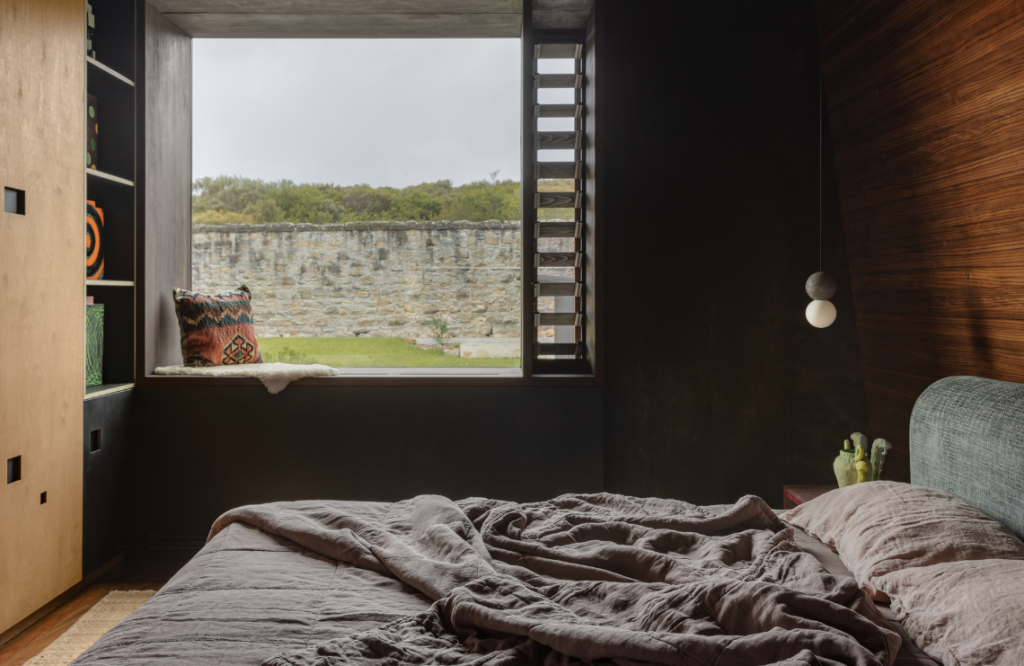
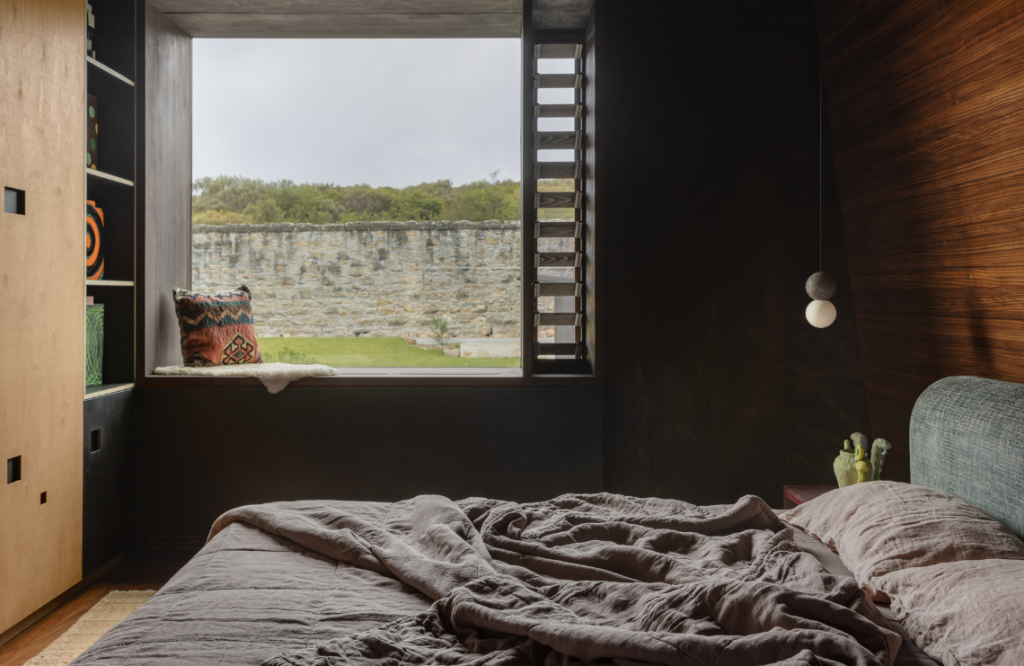
In this bedroom natural materials bode well with the selected pops of colour
The exterior of the house is clad in spotted gum hardwood shou sugi ban, a Japanese method of pre-charring the timber. It also meant the dwelling achieved a Bushfire Attack Level (BAL) rating of 29, which was essential.
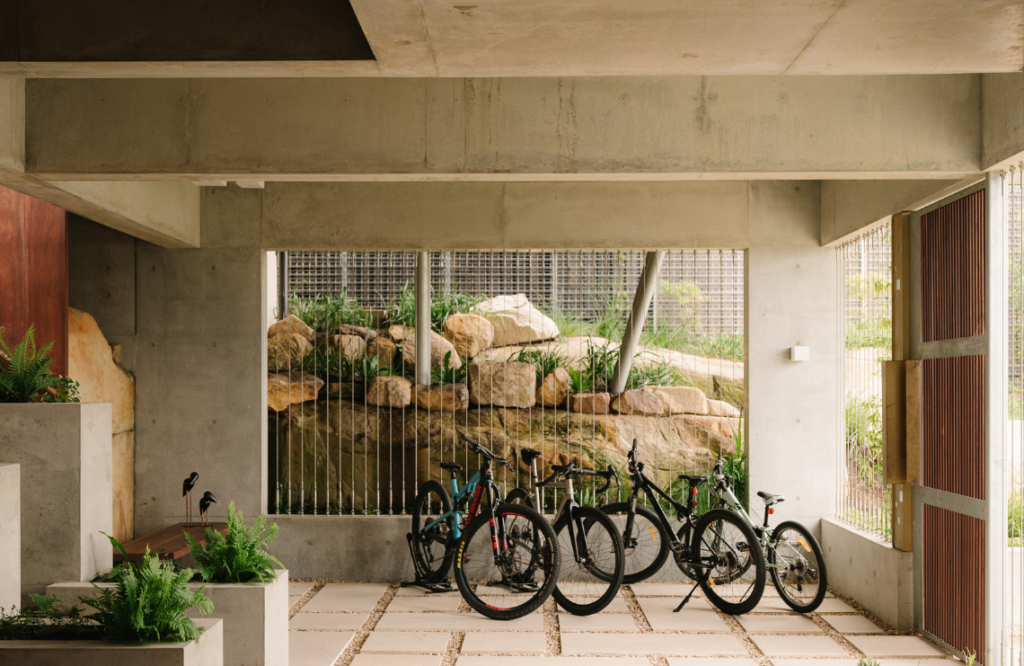
Sustainability was key, with prolific use of environmentally friendly, low-chemical compound materials and also reclaimed materials where possible. Joinery was constructed from low-formaldehyde plywood and paper rock, lower-carbon concrete, and low-maintenance fibre-reinforced plastic to create the latticework effect on the canopy.
By design, the house is part of the landscape. Clinton says it is permeable and receptive to the elements. “You accept thermal nuances — temperatures are not static and you feel wind and rain,” he notes. “And the landscape is not just stuff out a window.”