
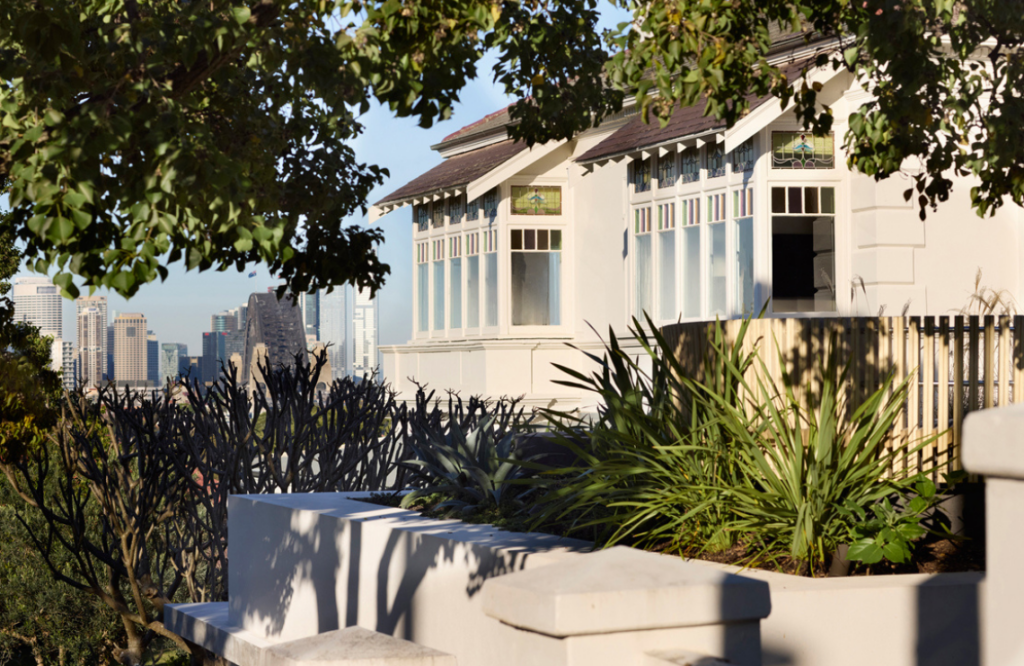
This remarkable home in Sydney puts a whole new spin on the term ‘bat cave’.
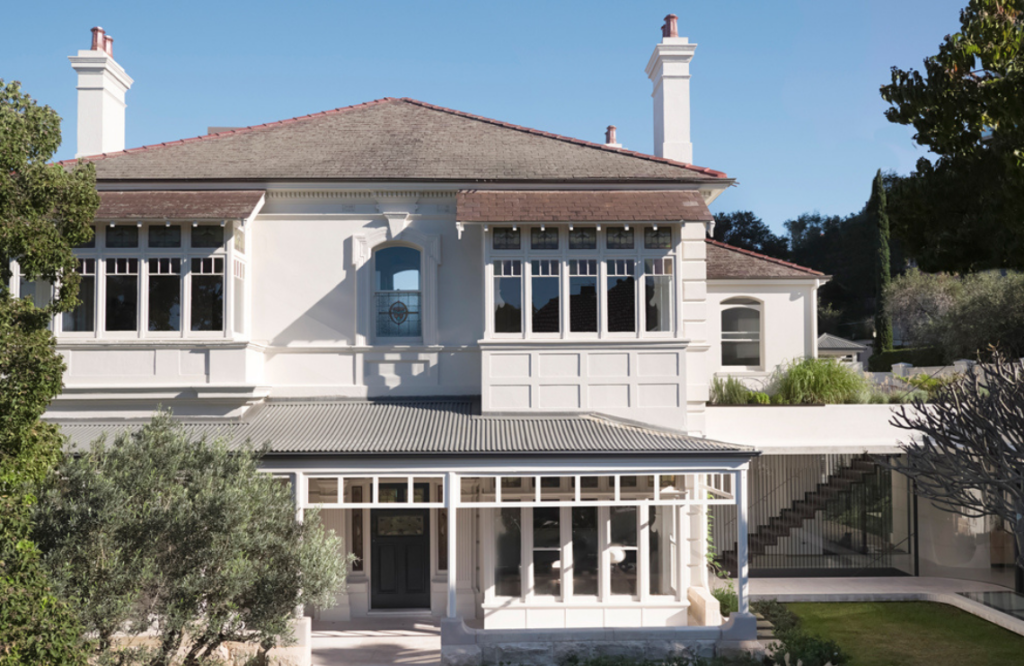
This stately heritage-listed home in a prestigious address on the lower North Shore was designed in 1889 by architect Walter Liberty Vernon. He’s the same chap who put his stamp on The Art Gallery of New South Wales, the iconic Central Railway Station and Customs House in Circular Quay, as well as other elegant residential dwellings.
Fast forward a century and the once grand old dame was not suited to modern-day living. Luigi Rosselli from Luigi Rosselli Architects noted that rooms were cramped and compartmentalised, the kitchen was disconnected, and there were limited opportunities for expansion due to heritage restrictions.
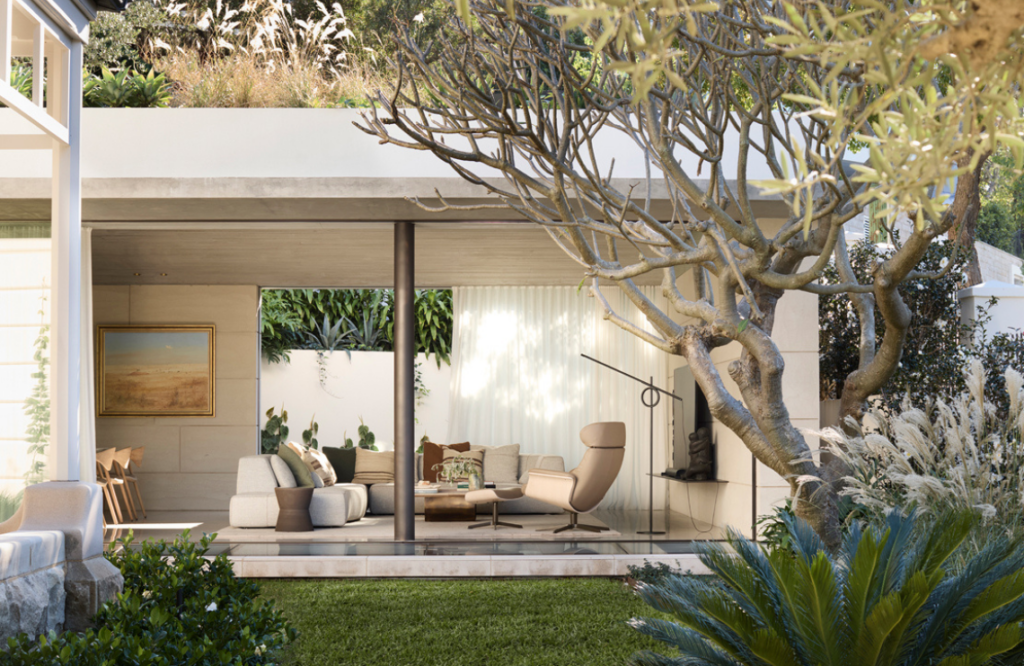
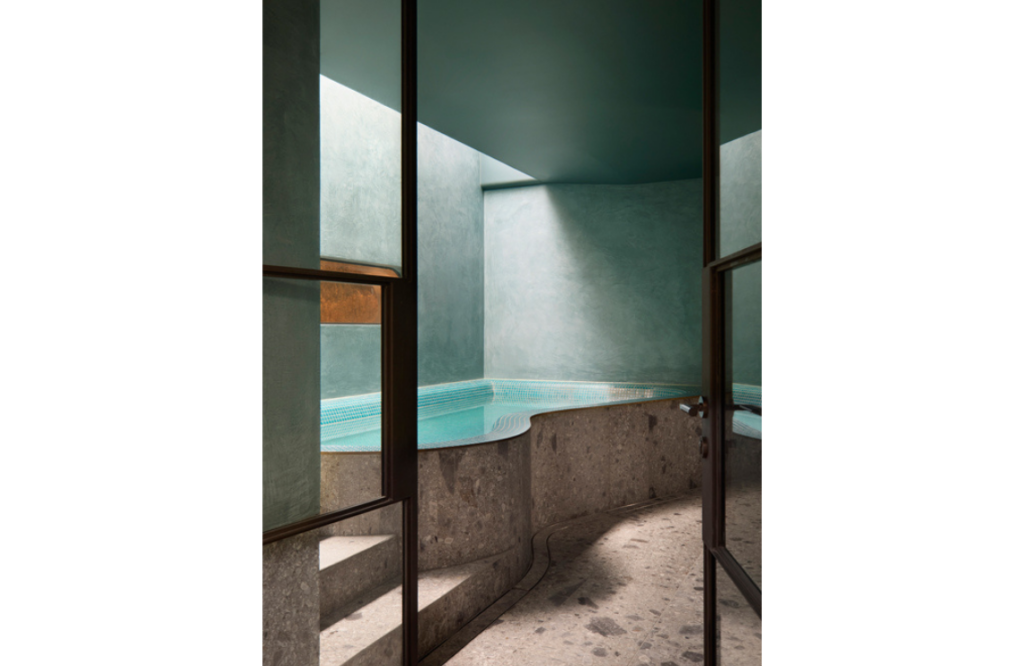
The homeowners wanted to add open-plan living, improve connectivity, and incorporate wellness spaces that included a pool, gym, spa and sauna. Luigi says they sought more space, light and better flow, without visible extensions or loss of greenery. “They wanted to create a comfortable long-term family home that supports both relaxation and wellness while preserving the heritage building and garden setting,” he says.
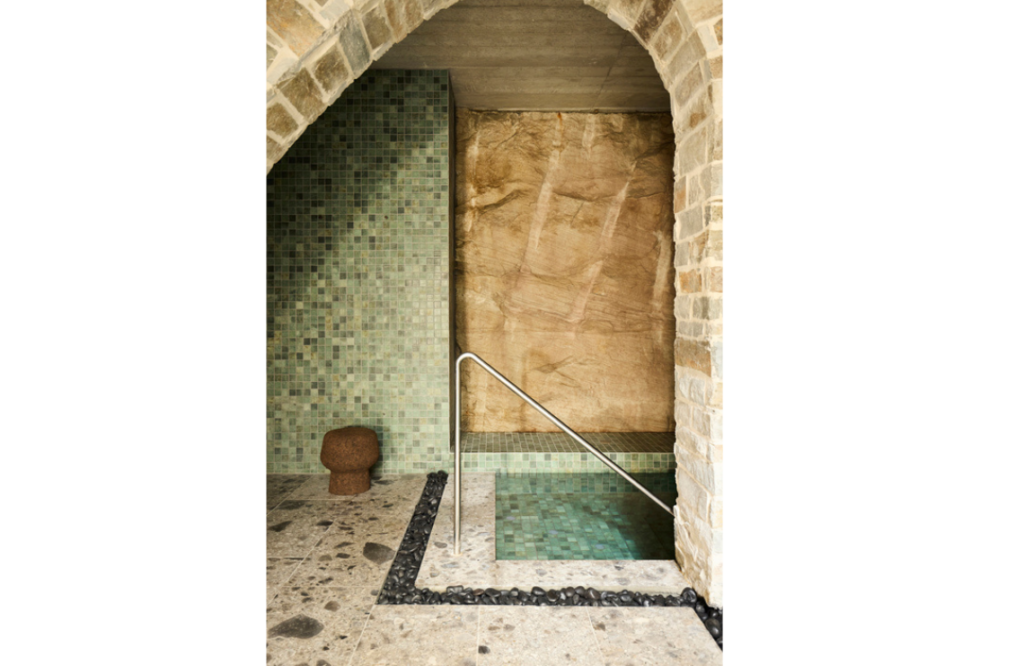
The home addresses sustainability through materiality and innovative design. The use of a geothermal ground-source heat pump system serves to reduce energy needs. In constructing the extension and building works, low-carbon concrete was used. Local products were sourced where possible, including mass sandstone from a local quarry.
This was a complex project. Delivering on the brief meant negotiating a series of formidable challenges. But with judicious design and innovative thinking, Luigi Rosselli Architects navigated those obstacles in style.
In order to achieve the architectural feat we see today, it meant digging deep — literally. With limited land, a corner block that offered no rear access for services and a steep sandstone site, adding two levels underground was a viable solution to house services and other amenities.
WE LOVE
The ideology of preserving greenspaces — the subterranean expansion meant landscaped gardens could remain
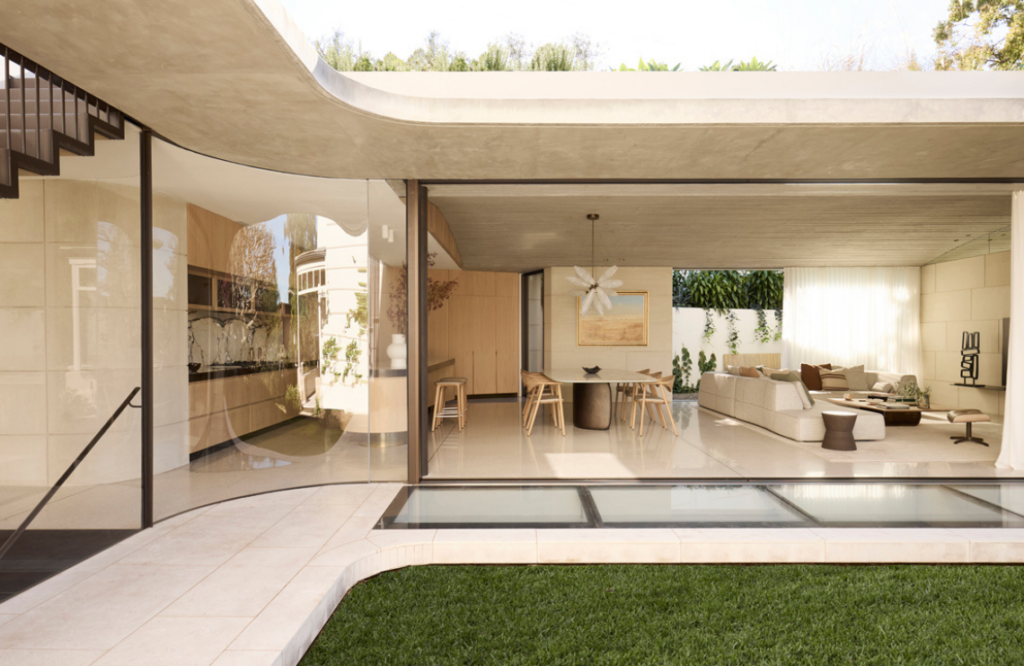
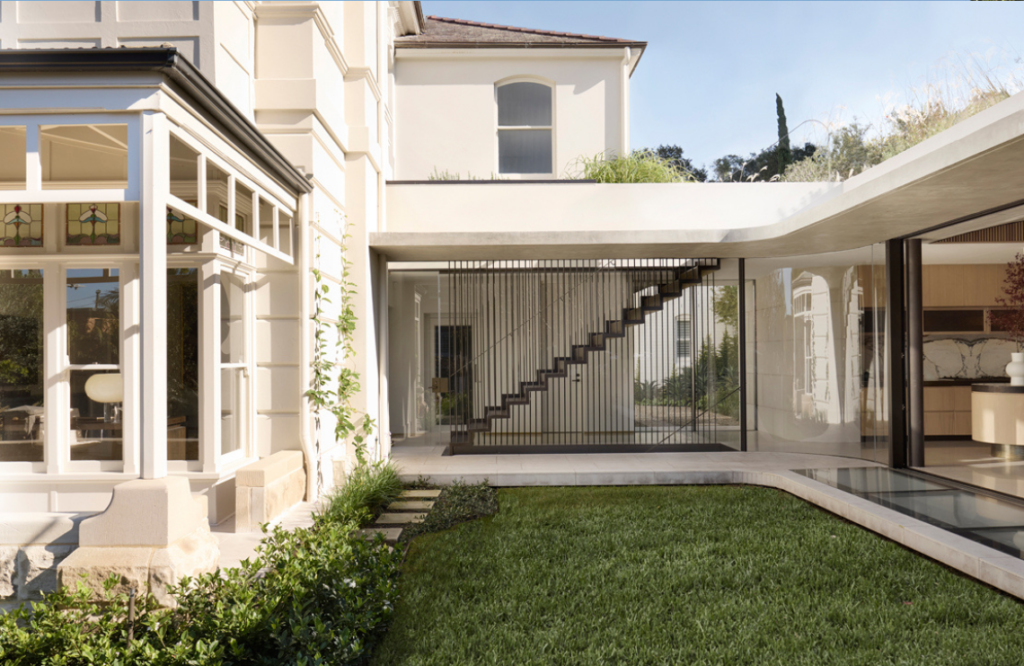
However, going underground threw up another challenge: how to punch light into the interiors. “Providing natural light to the subterranean spaces was achieved through glass stair treads and two levels of trafficable glass floors,” explains Luigi.
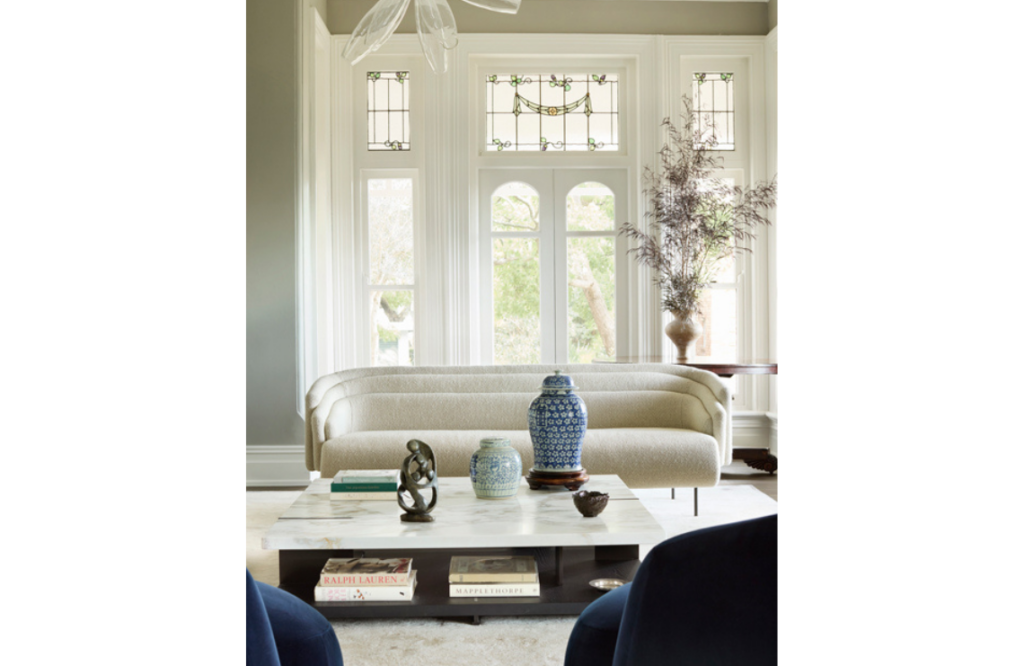
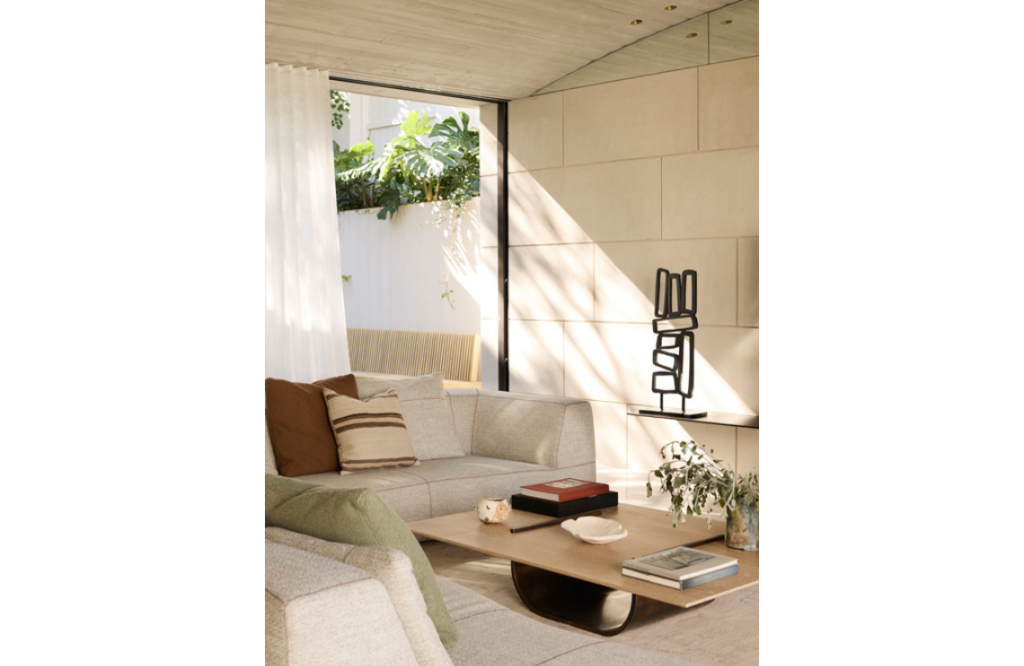
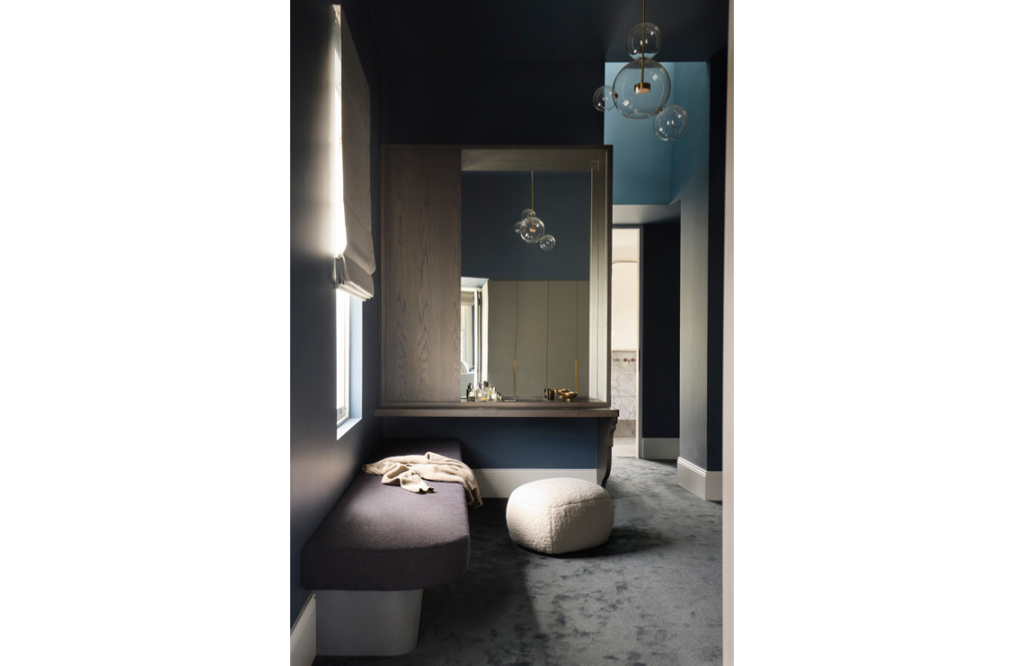
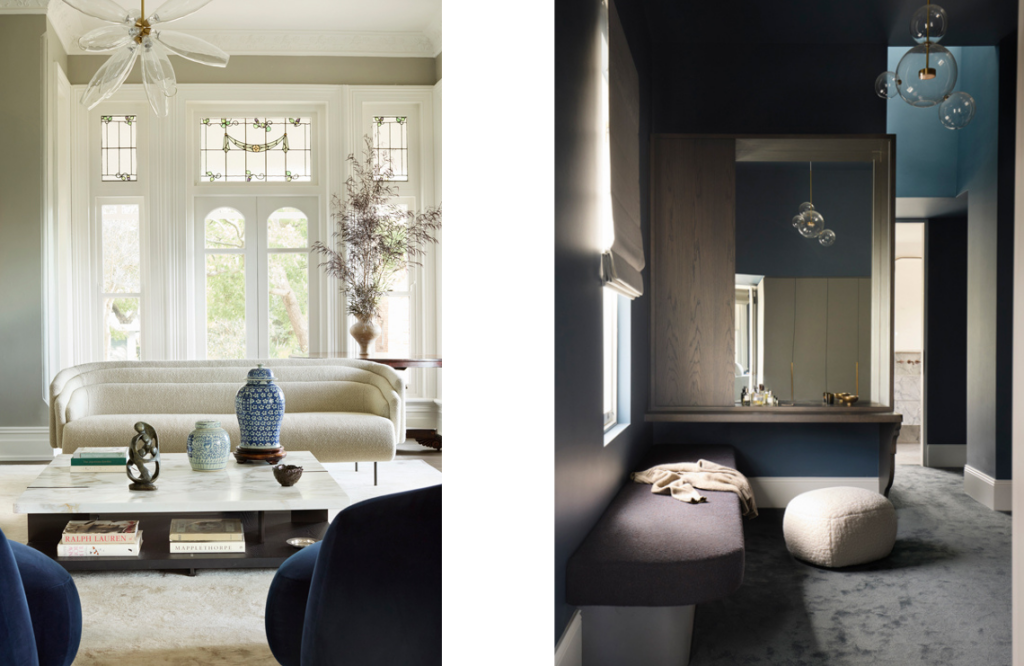
The additions also needed to be sympathetic to the original home. This conundrum was ably addressed by concealing the ground-floor additions into the existing hillside. The body of work completed was impressive. It involved designing and constructing a four-level addition that sits behind, and underneath, the original home. The house has five bedrooms and eight bathrooms. On the subterranean levels, which sit under the garden, there’s a gym, spa and sauna, mud room, plant rooms and service spaces. The ground floor houses an informal wing made up of the kitchen, pantry, dining and living spaces. Renovations to the existing home were completed on this level to add a bar and a guest bedroom suite. On the first floor, renovations were carried out to create a grand master suite, two bedrooms with ensuites and access to an attic bedroom with ensuite.
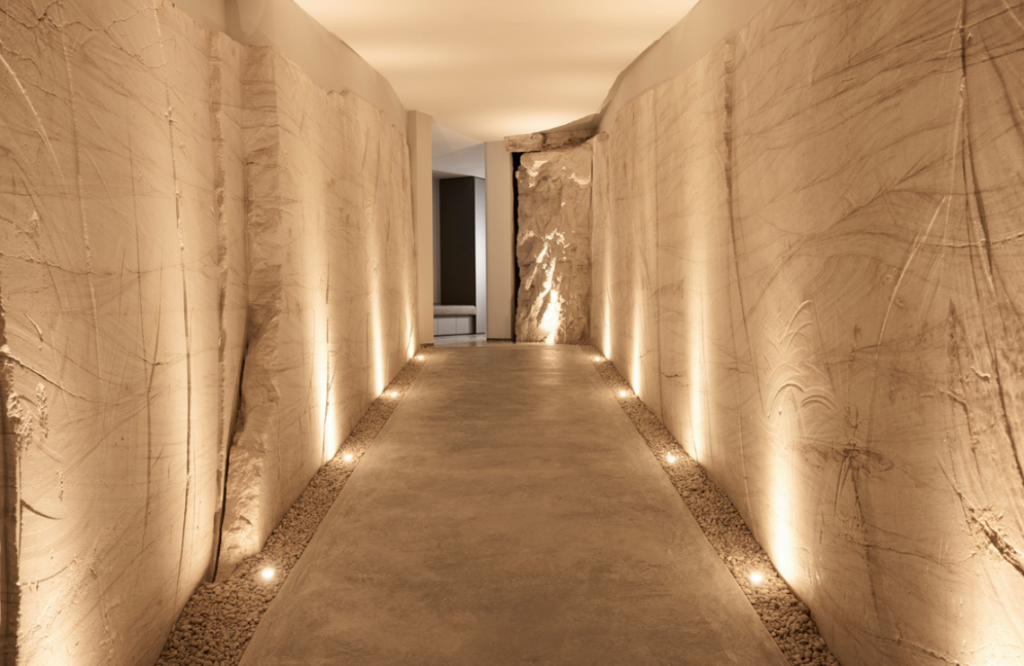
Textural walls take you on an evocative journey
Luigi notes that the term “cryptic architecture” — which is building concealed levels underground — certainly isn’t new. It’s not often implemented in modern-day residential building in Australia, but perhaps it should be. This project combines a heritage home with a modern four-level addition that can hardly be seen from the street. “The project demonstrates how to expand in dense urban settings while preserving history, landscape and privacy,” he explains.
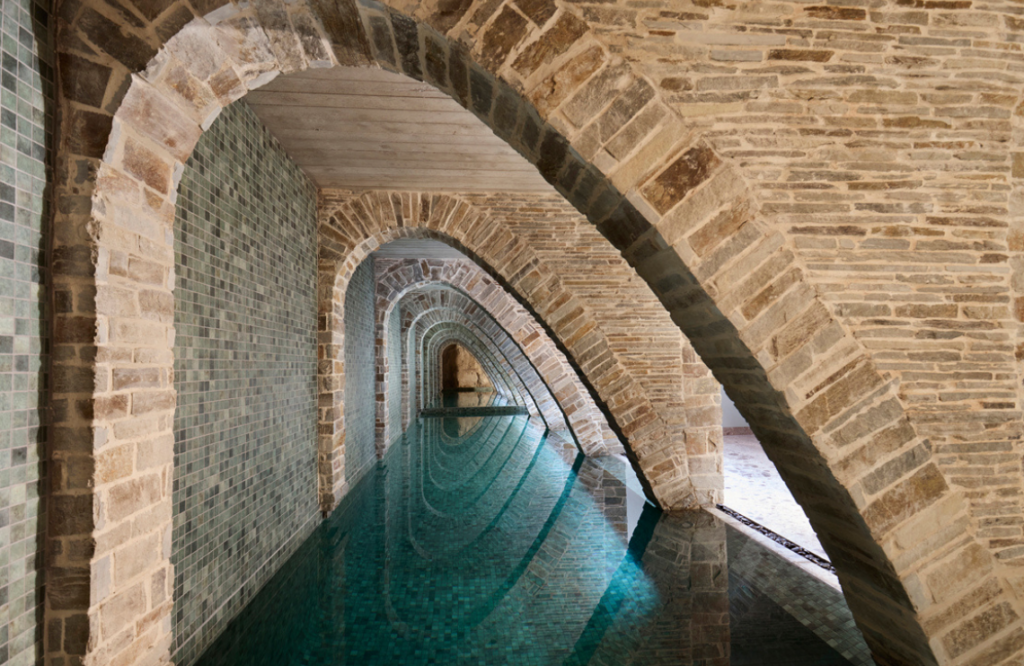
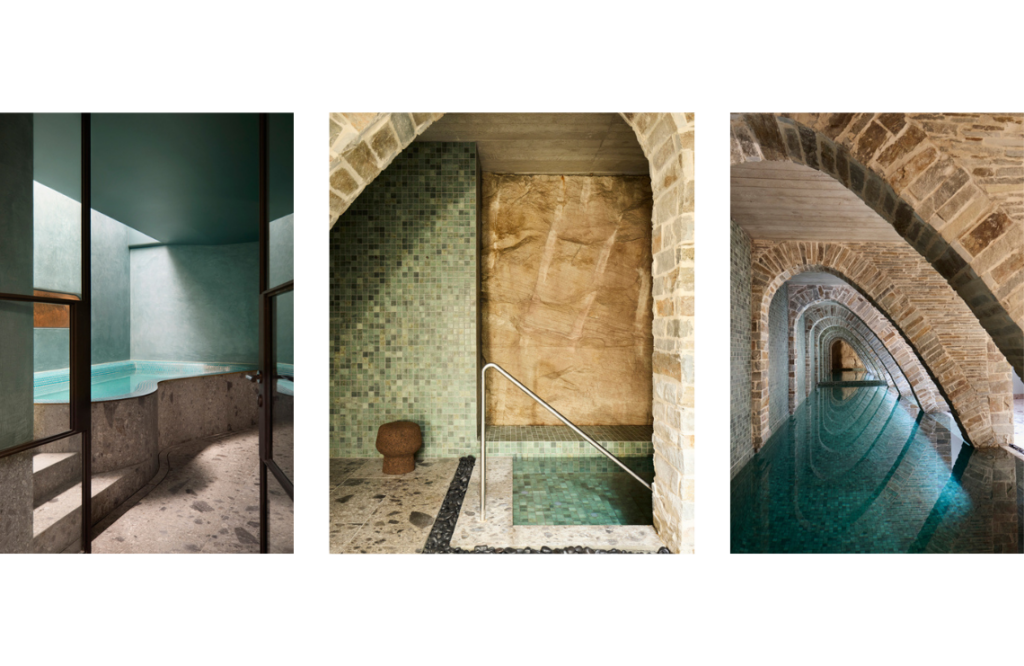
The architectural inspiration for the project included Gaudi’s parabolic arches in Park Guell. When Luigi proposed Gaudi-style arches for the pool to the homeowners, they were visiting Barcelona and could see firsthand how it might appear. “They immediately approved the idea, which became the project’s defining feature,” he enthuses. The underground pool is impressive. The stone chamber soars upward, the arches adding symmetry and rhythm.
This project redefines notions of old and new. It doesn’t just push the boundaries of residential architecture, it cracks them wide open. We get a firsthand glimpse of what is possible. “The project showcases how heritage preservation and modern living can coexist,” says Luigi. “It’s a model for site-responsive, sustainable design — hidden, efficient and timeless.”
Article Featured in Grand Designs Magazine 14.5