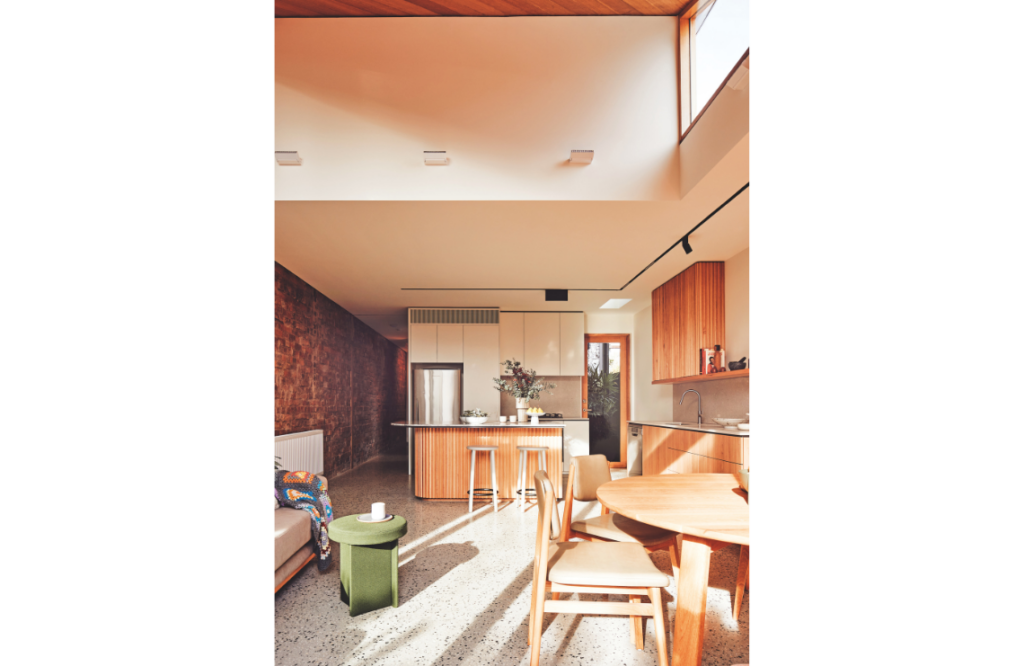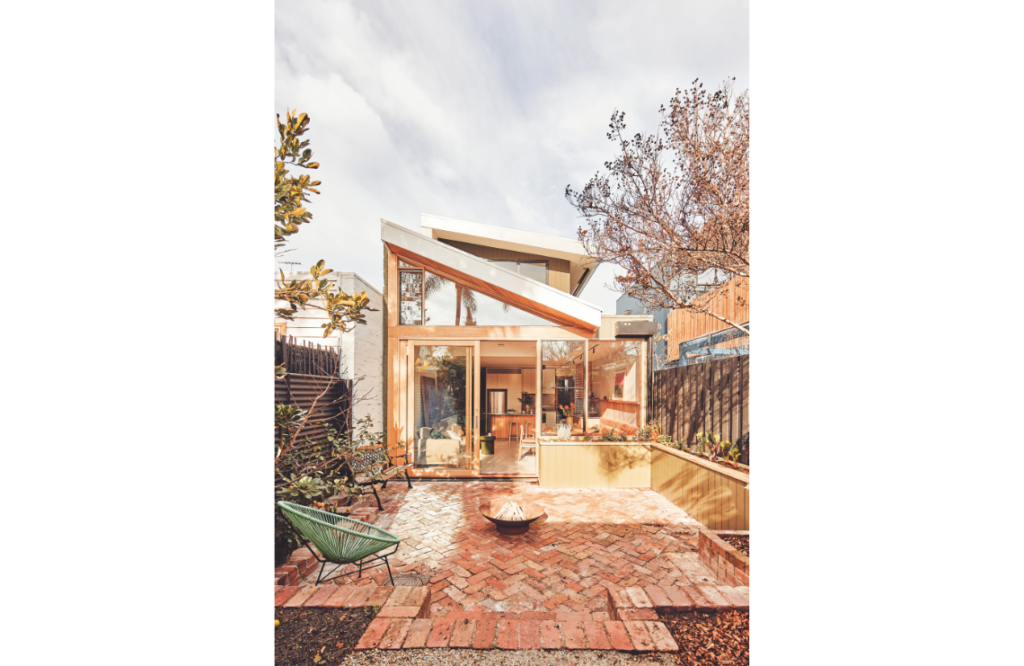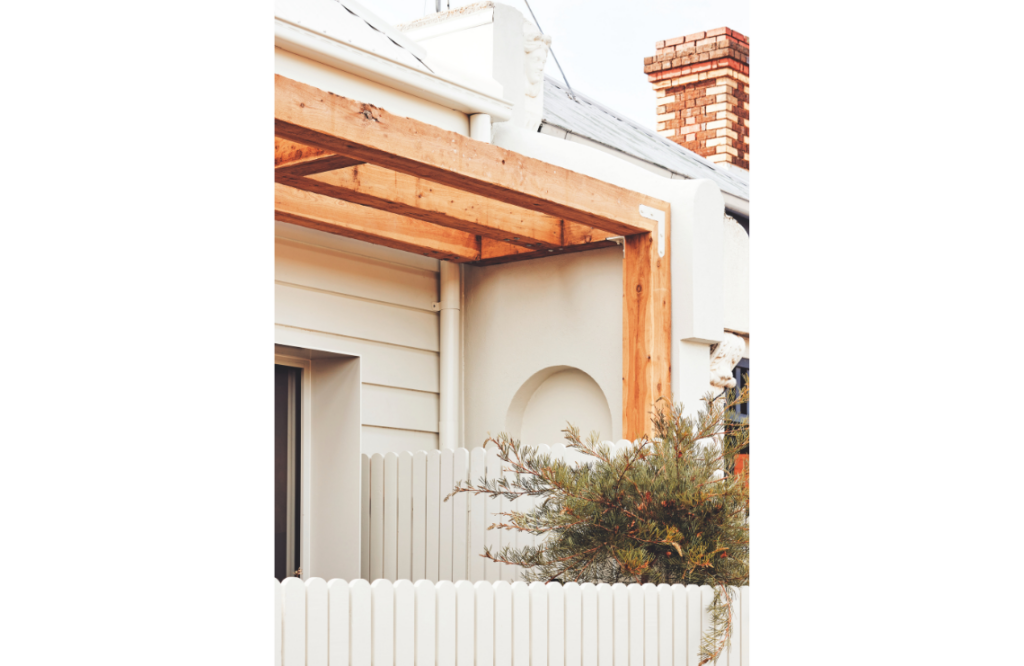

On a quiet street in a Melbourne suburb, single-fronted Edwardian townhouses sit side by side. Acknowledging the neighbouring architectural history and reflecting the pattern of the street, this new-build, two-storey home retains the original footprint while offering the homeowners a modern, light-filled interior.
As with most period homes, the floorplan deprived the interior of northern light and a connection to the outdoors. The original kitchen faces the side boundary fence and the laundry had external access. The homeowners were looking to rebuild the home, adding a second storey and additional space, as well as making the most of the city views accessible from the upper floor.
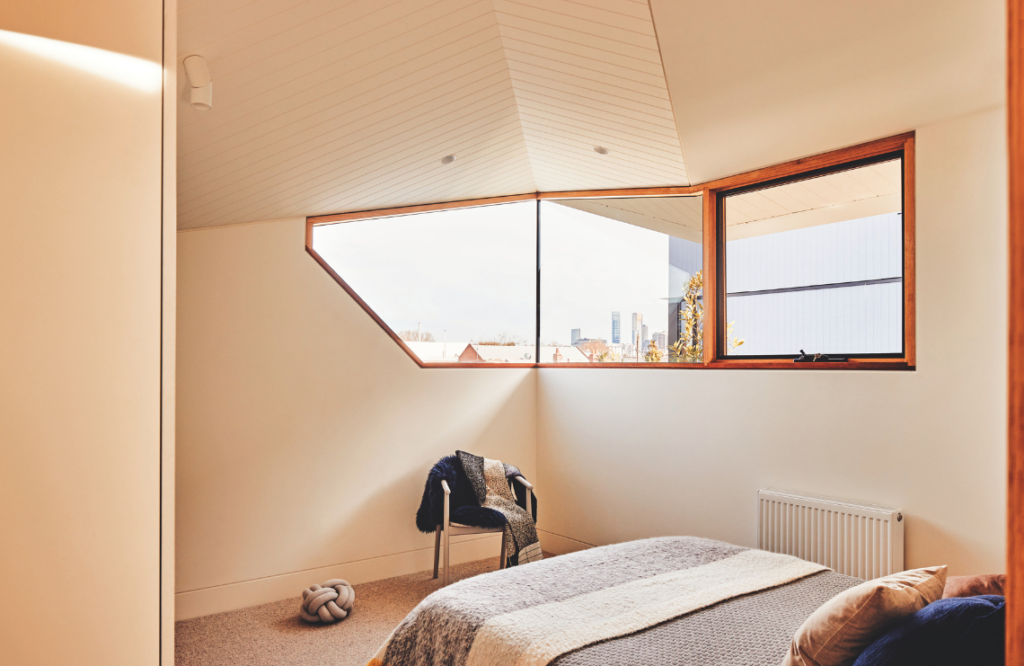
“The client also knew from getting up onto the roof that there was a view to the city, so we designed the large corner window to frame the view in the main bedroom,” says Sally Timmins, director of Timmins+Whyte Architecture+Design. “The clients have already sent us photos of the window from their bed showing three hot-air balloons passing by early one morning, and another of the city glowing as the sun was setting in oranges and pinks.”
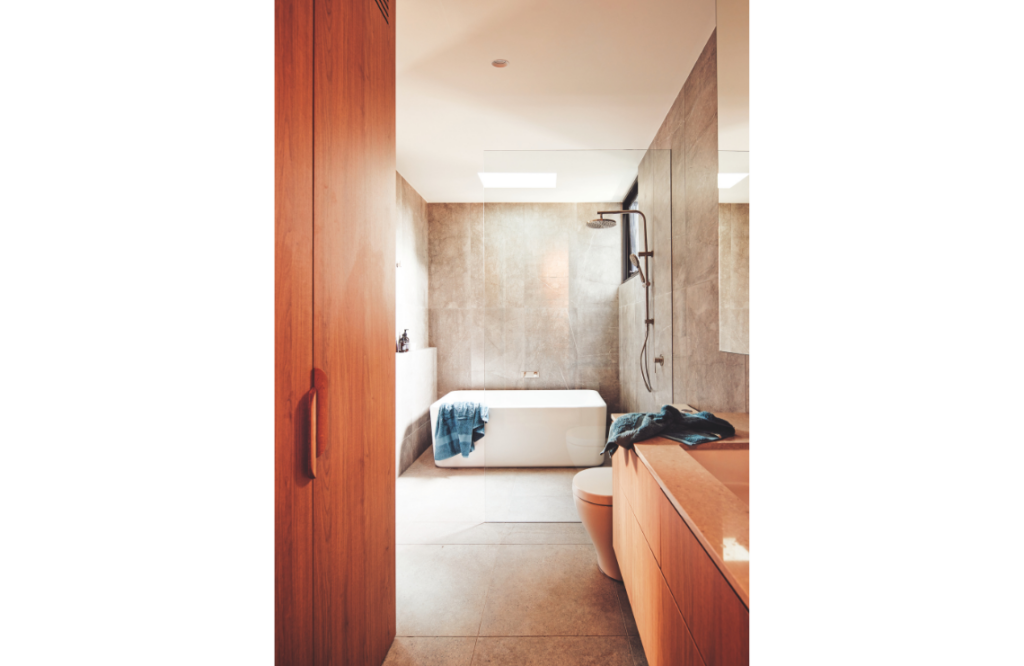
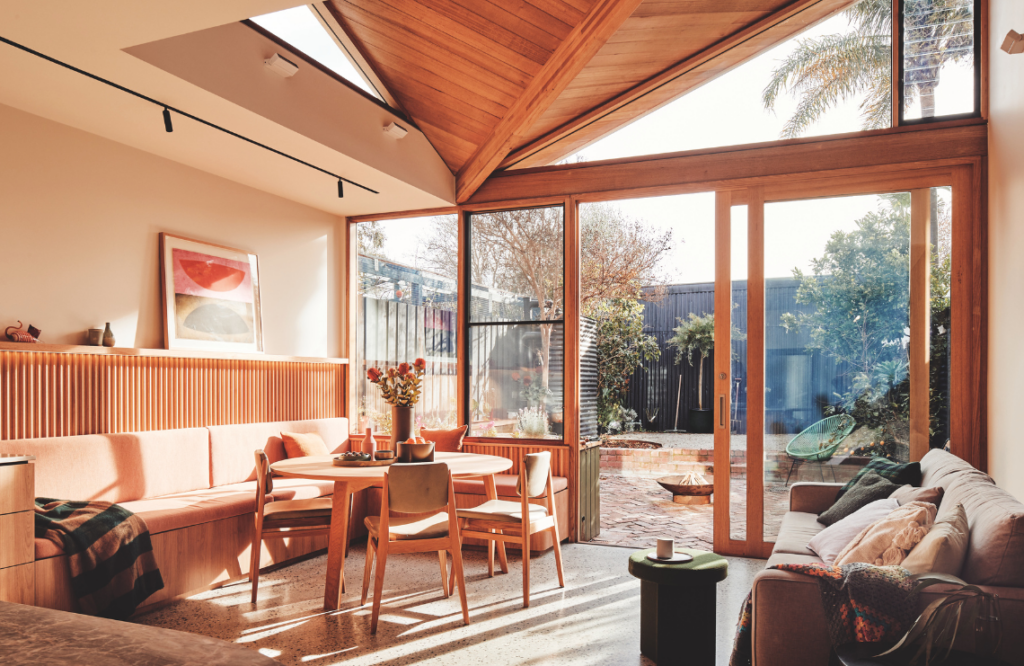
While the home’s presence from the street was important, it was the reconfiguration of the floorplan to allow the living space to open to the backyard that drove the overall design. To achieve this, the bathroom and laundry was moved from the rear to a central location, and the unique 10-fold roof design
was implemented.
“The inspiration for the design was to use the roof planes to fold along the narrow site to address the street pattern and create volumes of space punctuated by light,” shares Sally. “The upper-storey roof folds down to minimise visual bulk to the single-storey house to the east and rises to soften the contrast of the large ‘solid’ neighbour to the west. The rear butterfly roof creates openings on the north and west for light and views.”
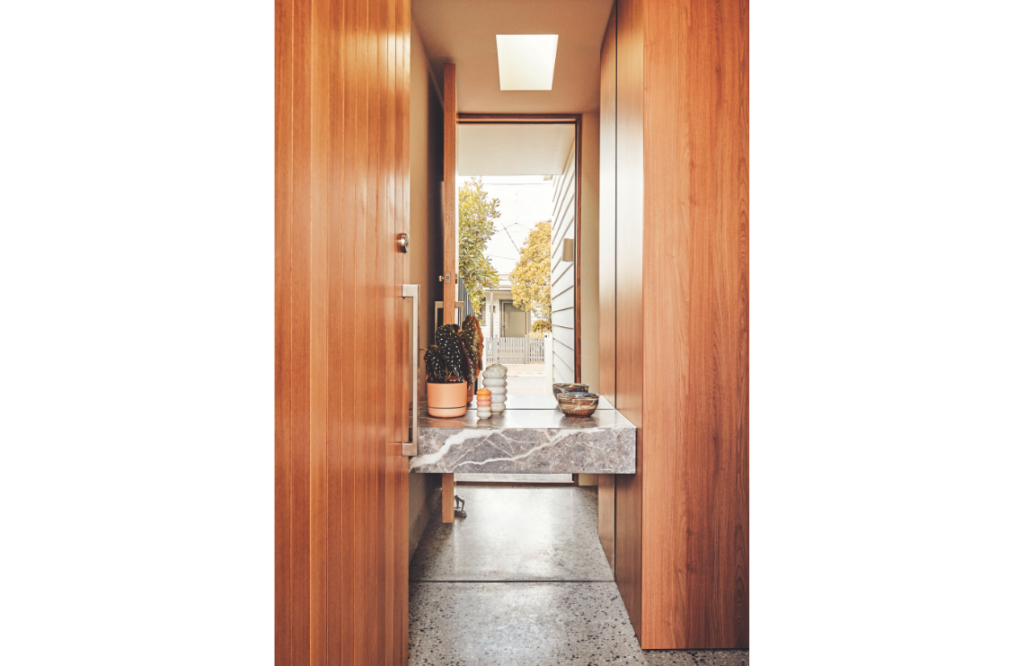
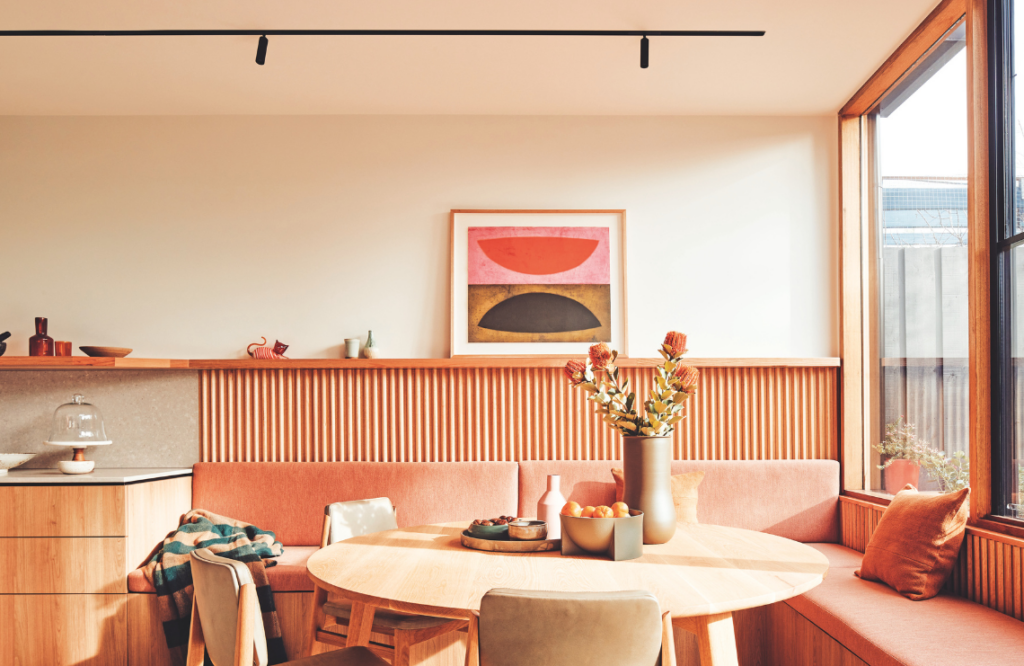
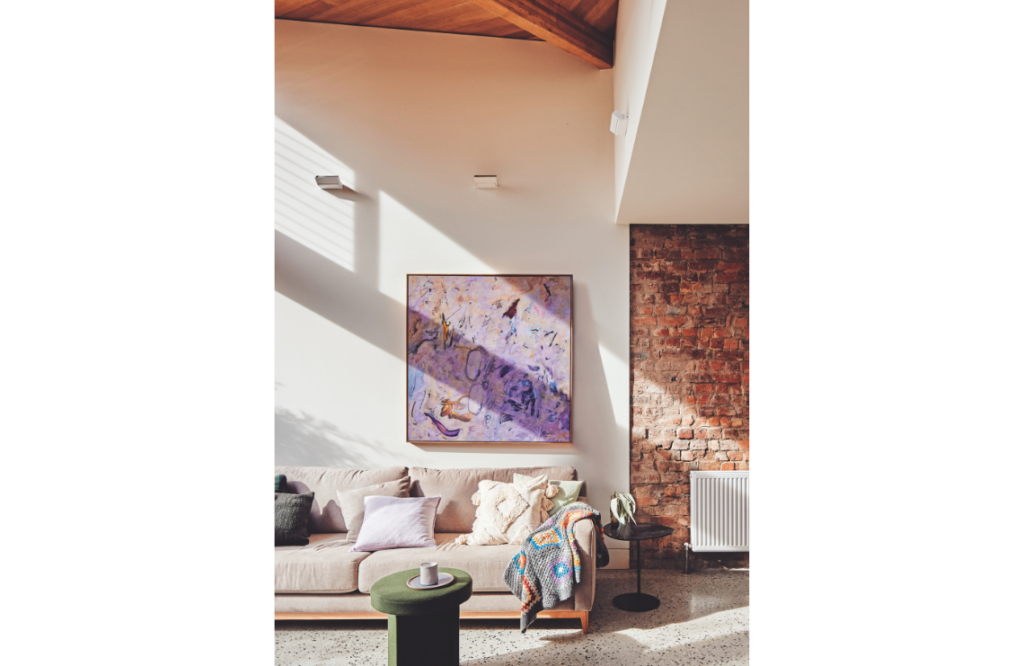
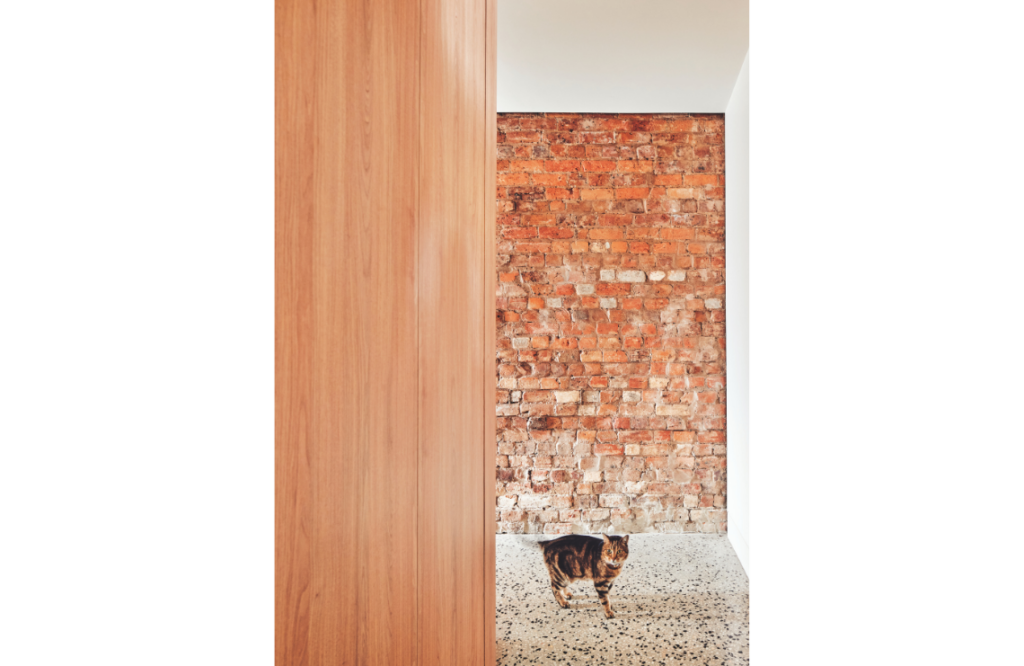
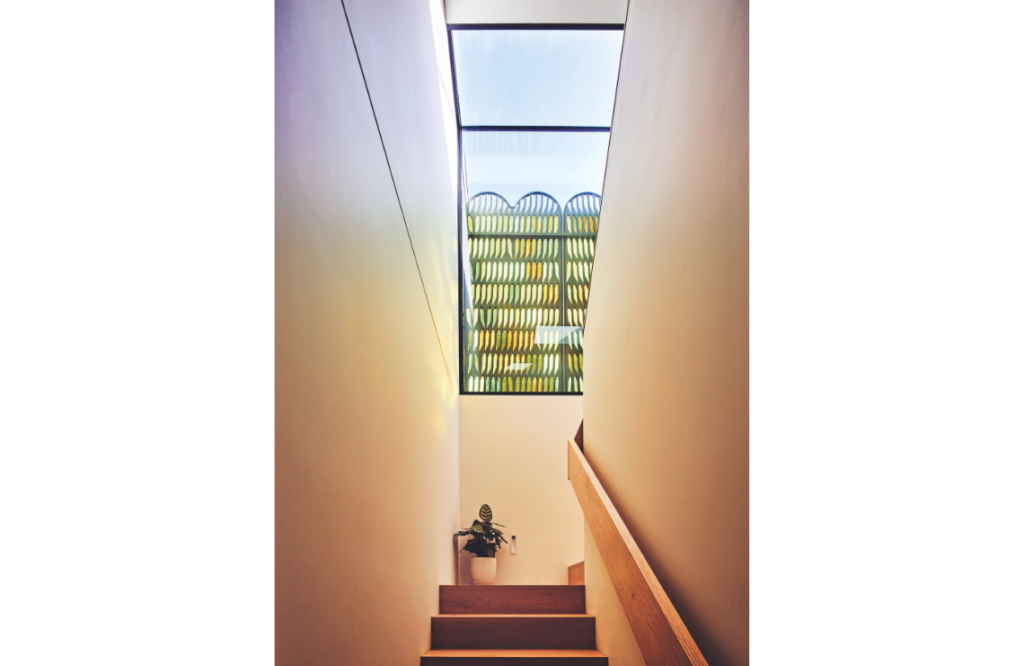
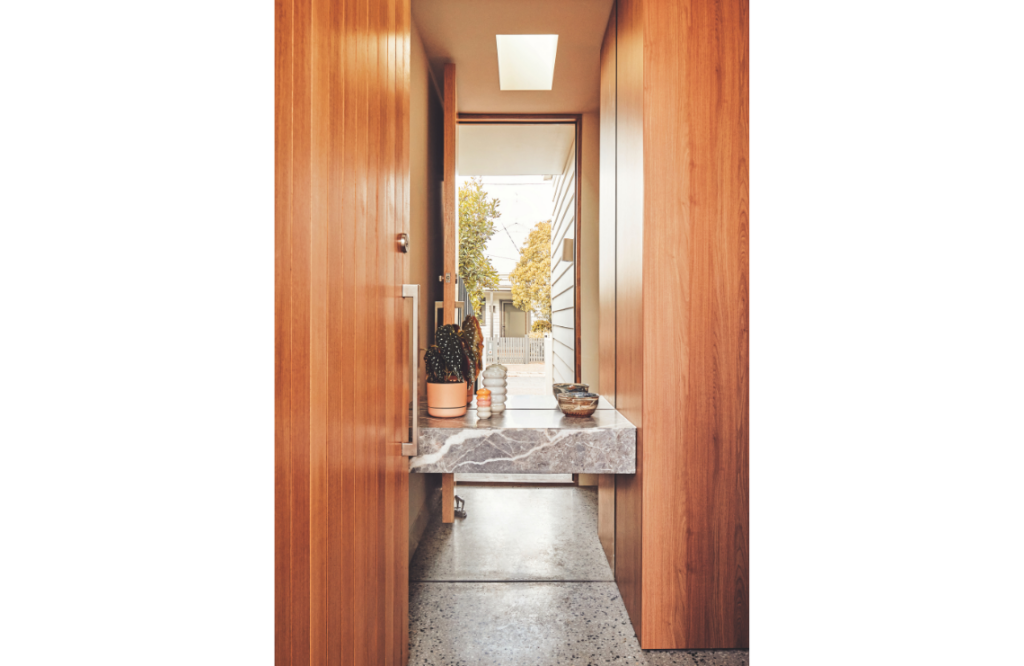
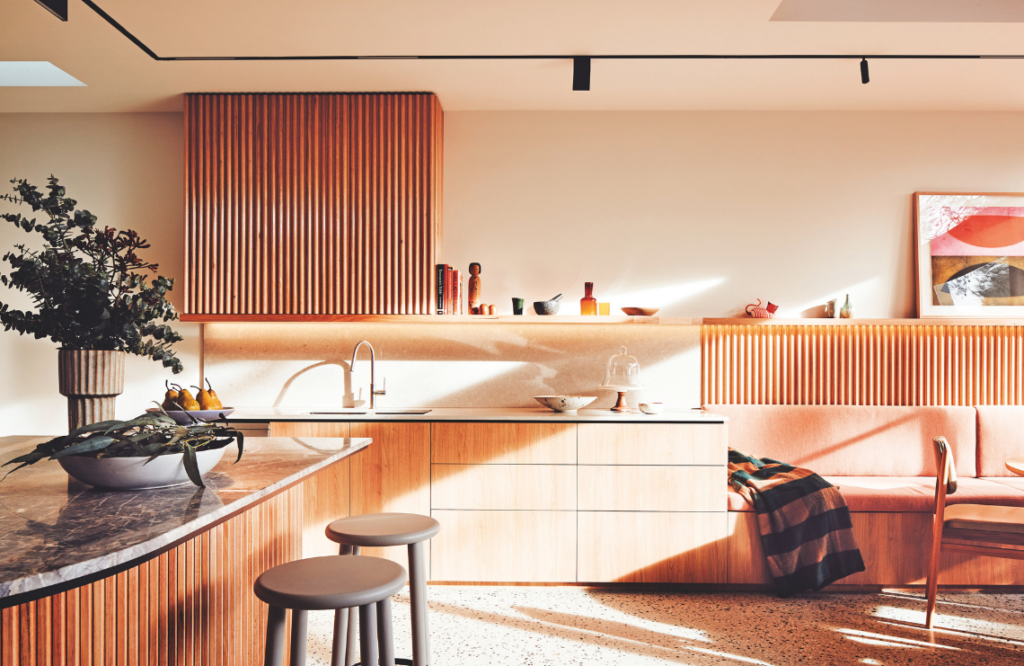
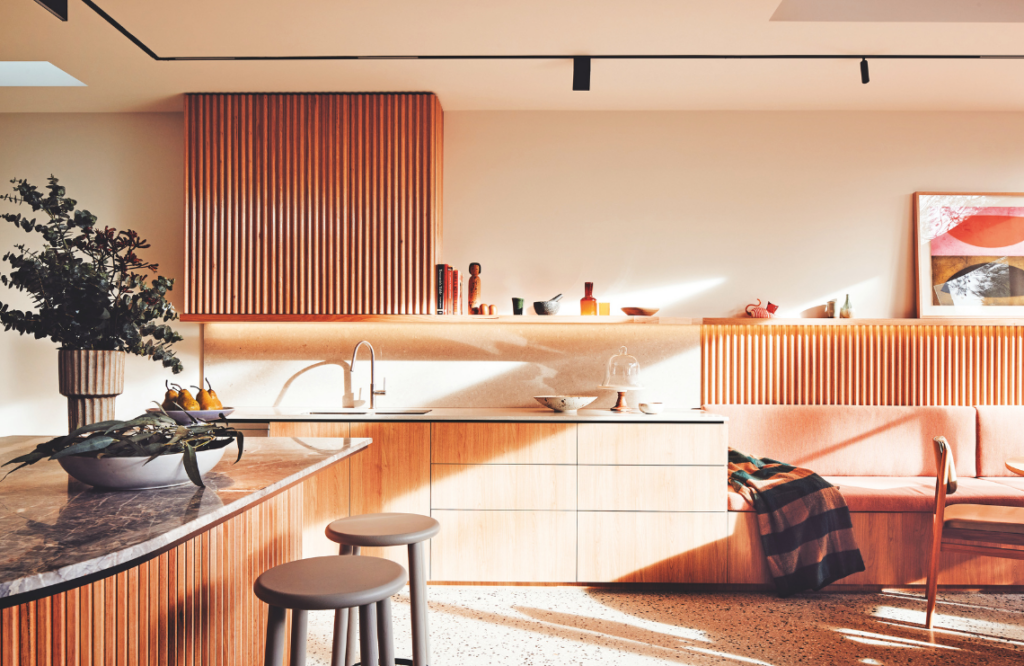
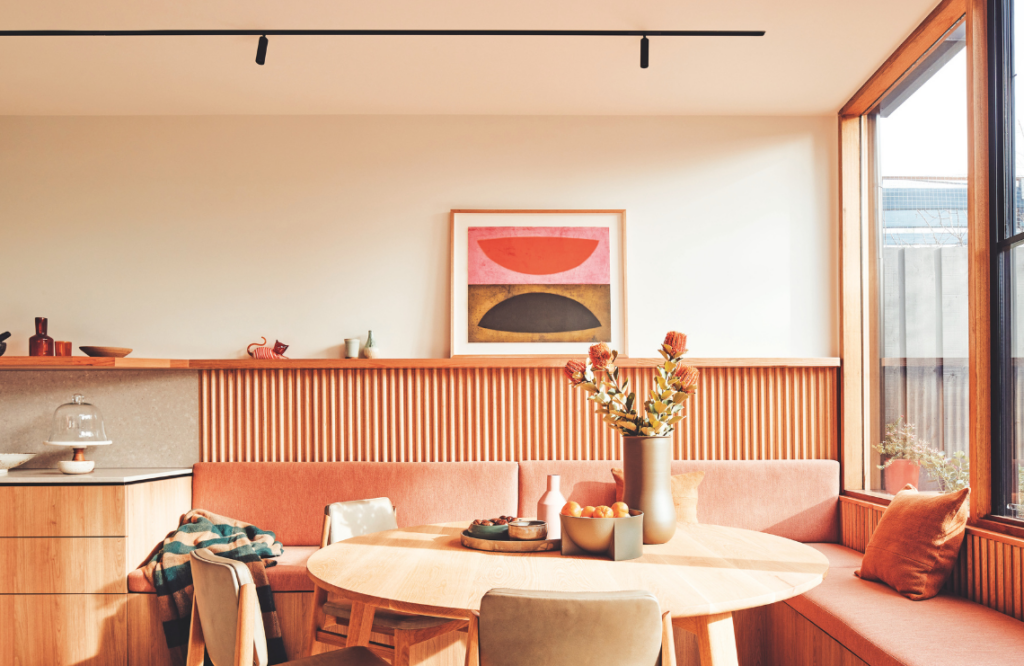
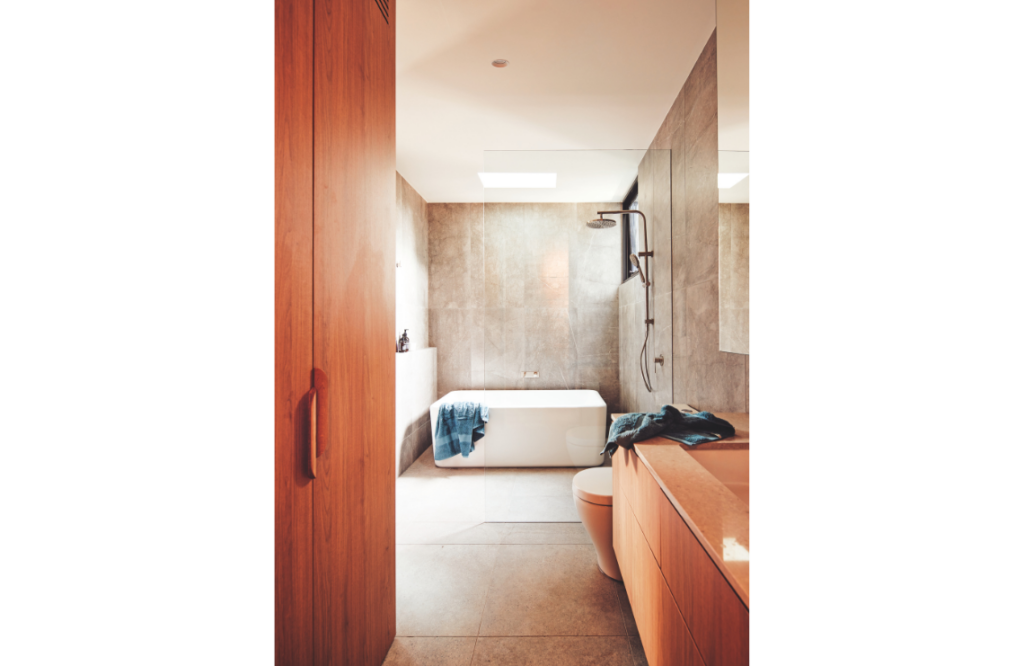
Built as a “forever family home”, the interior material and colour palette is “neutral and earthy”. Textures such as Tasmanian oak and natural stone complement the exposed brickwork that was preserved from the original building. A muted colour palette of greys and soft pinks creates a feeling of warmth with an intricate stained-glass window in the stairway, reminiscent of a “droopy gum tree with its myriad greens and pinks and yellow hues that are highlighted when the sun shines through it”.
Sally points out that the colours of the house, both externally and internally, are based on the native Australian bush. “The green externally, the Tasmanian timber with its pink hues and the fabric on the banquette were carefully chosen to complement the existing heritage brick dividing wall that was retained and remains exposed,” says Sally.
10 Fold House is a beautiful example of rebuilding while paying homage to its architectural history, as well as respecting the pattern of the street.