
This rural home has evolved over time and it’s latest instalment is utterly charming
This is a tale that began to unfold on a rambling 20-acre rural property in Langdons Hill in Victoria in 2014. Then, the first of three projects, named Plinth House, was born. It was aptly named because of the concrete and stone plinth that surrounds it. Three years later, a freestanding studio to accommodate guests was constructed, offering the ultimate rural escape for friends and family.
In 2022, the third part of the trilogy began. Luke Stanley, from Luke Stanley Architects, says the homeowners had set one last challenge. “This was to add a master suite to Plinth House without destroying the wraparound verandah and plinth, and the connection to the gardens,” he says.
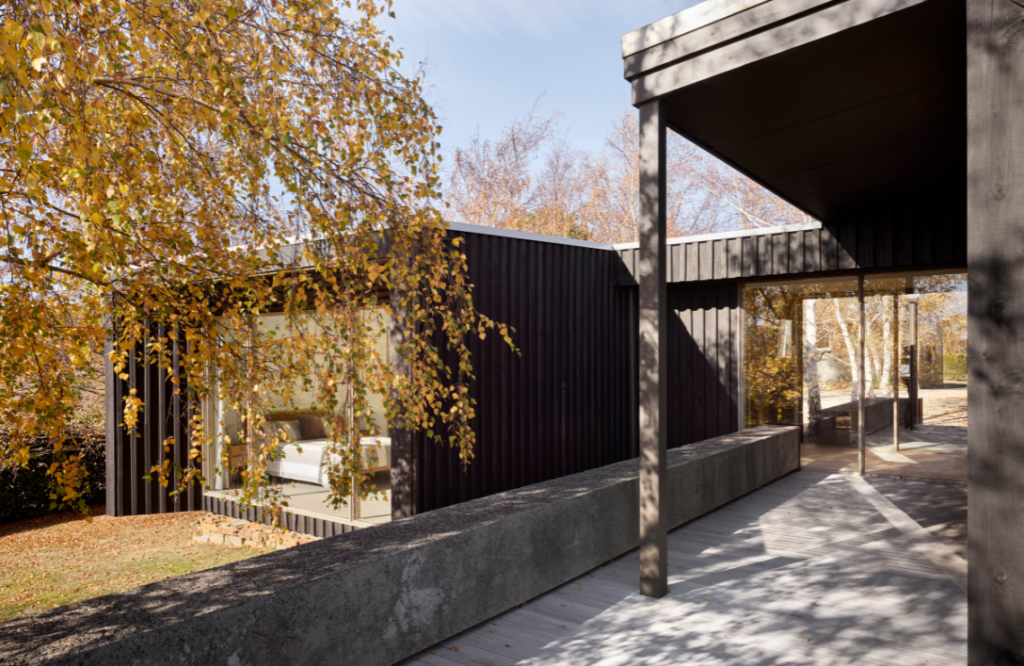
The history of how the plinth came to be is intriguing. The clients informed Luke that the plinth was added to the original house by Broderick Ely, founder of B.E Architecture, after the old home was relocated to the property as a weekender. “It is a unique feature and has become a key part of the house’s evolution over the years,” says Luke.
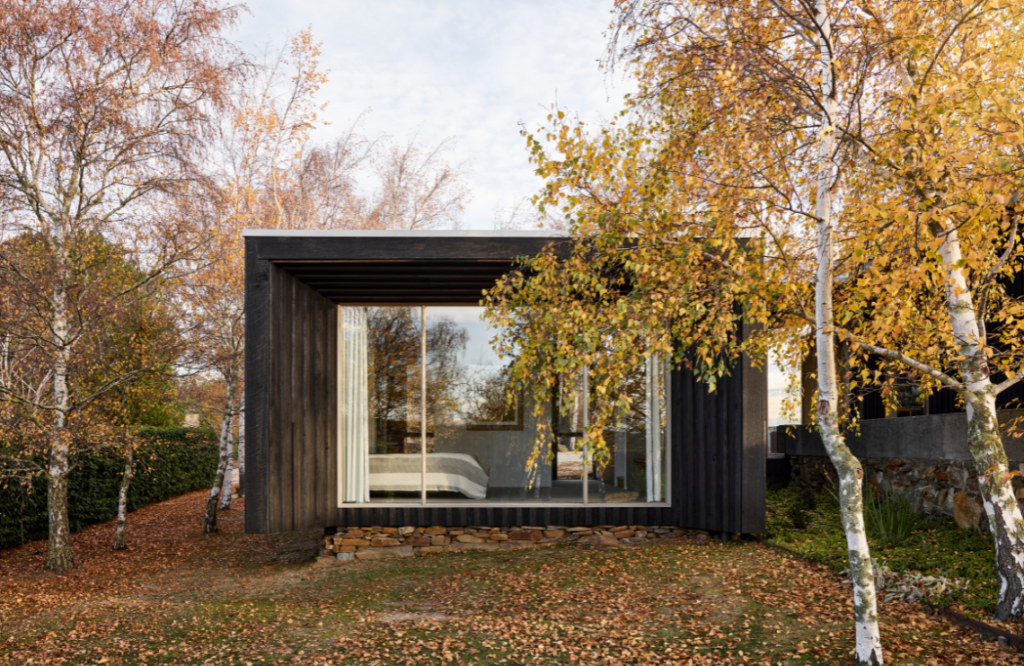
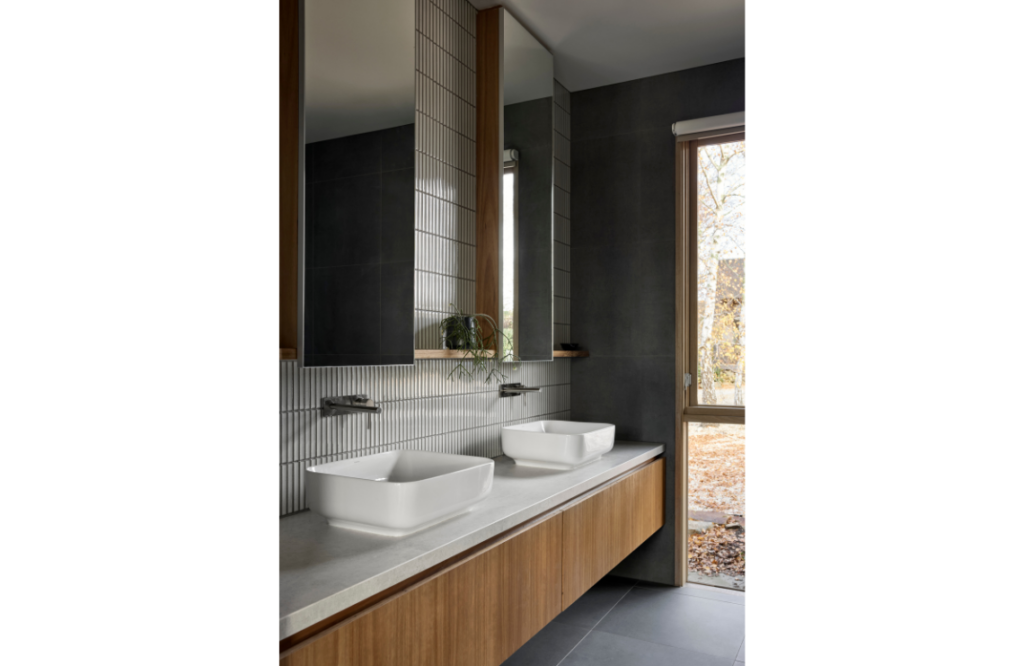
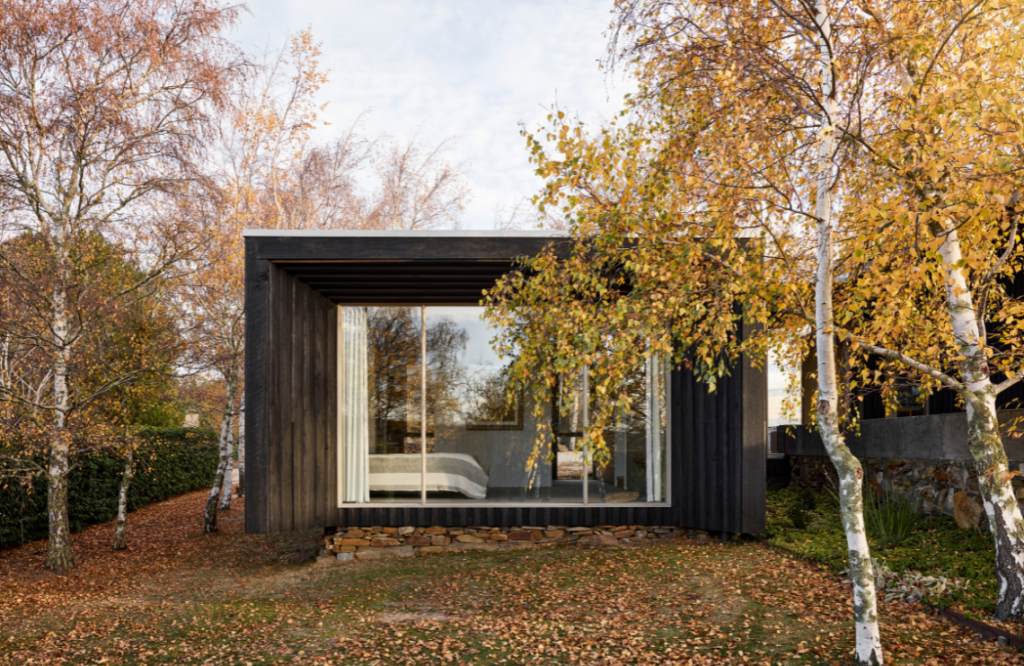
Two retired graphic designers, and their dog, live in this rustic rural home. The master suite addition included a comfortable bedroom, along with a walk-in robe and ensuite on the eastern side. It’s tucked into a grove of leafy birch trees — a calm introspective space surrounded by nature. The orientation of the new extension also captures plenty of natural light and offers glimpses of local wildlife. “The new master suite benefits from a north-facing location on the eastern side, giving access to morning sun and views of resident kangaroos grazing in the paddocks,” notes Luke.
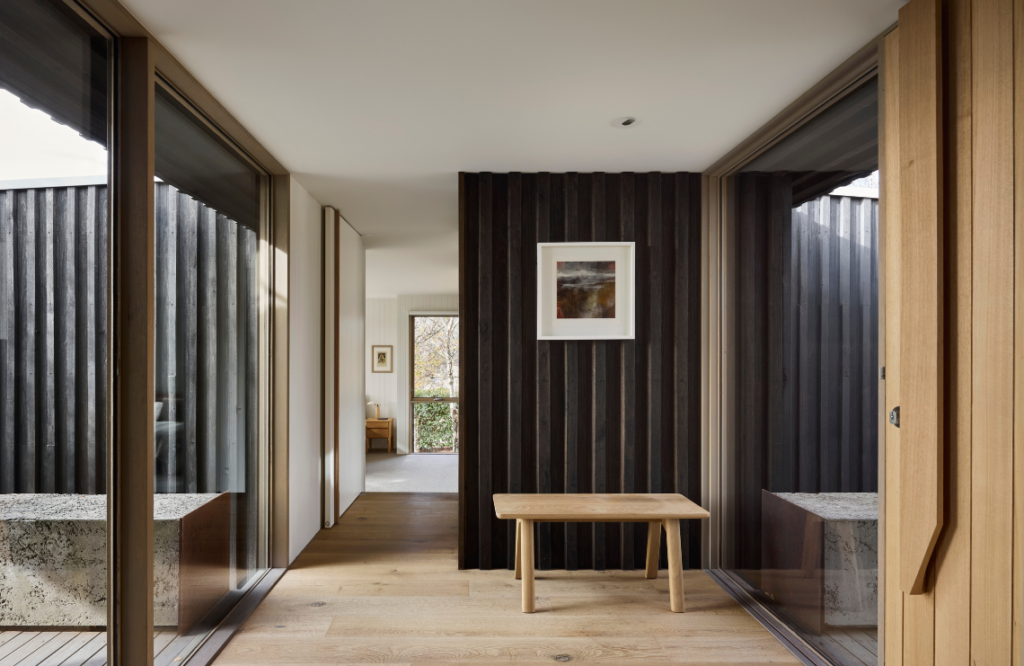
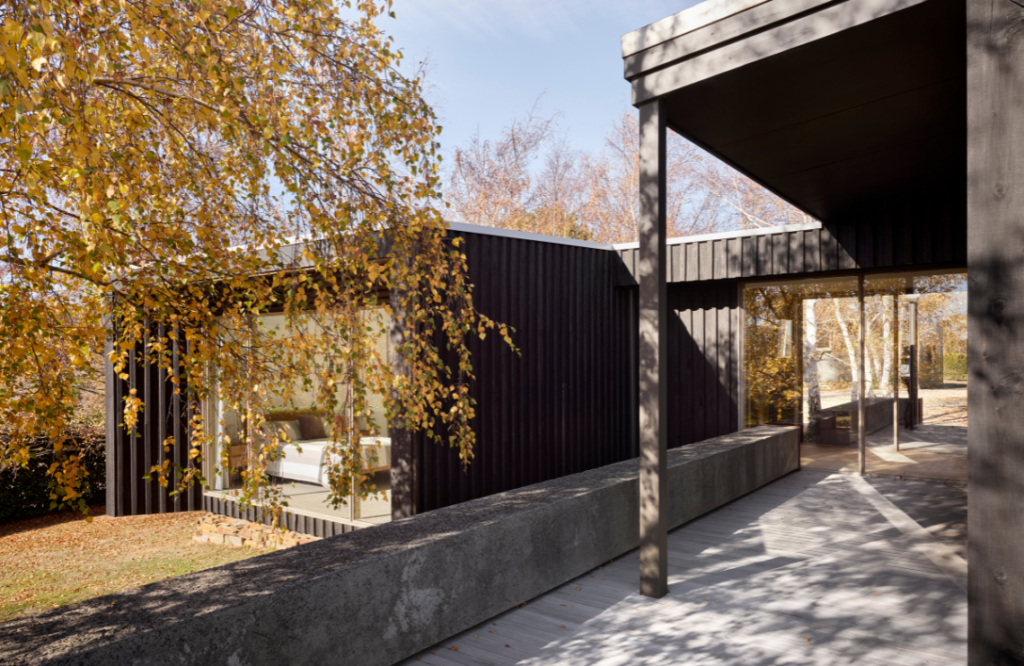
Inspired by the existing board and batten-clad house and the plinth, the new addition began to take shape. “Dark, rough-sawn timber cladding marries the new works with the existing buildings and provides a backdrop to seasonal changes,” says Luke. “It also sits comfortably within the local environment and in deference to the original home.”
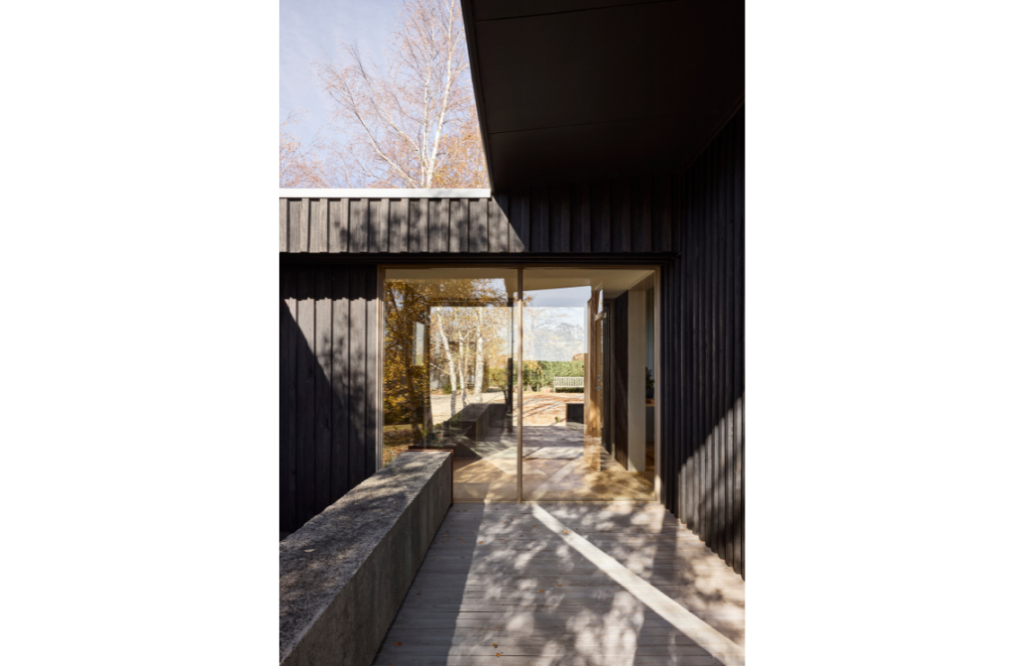
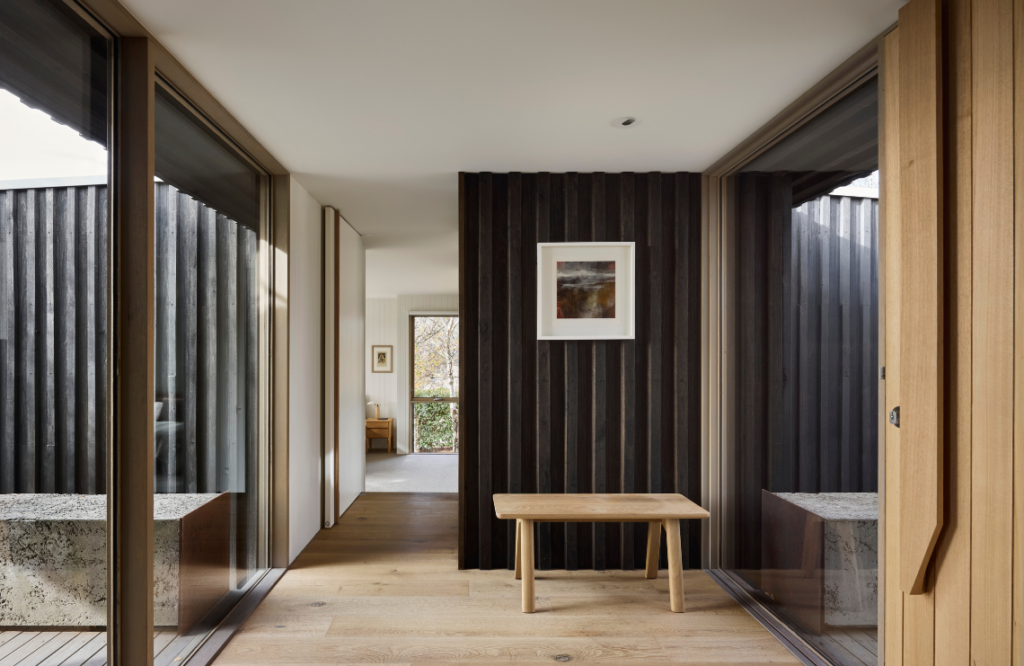
Luke says the quiet and sympathetic addition did involve removing a section of the stone and concrete plinth. “A new entry space was tucked under the existing verandah, allowing the original roofline to remain untouched,” he explains. To distinguish between private and public areas of the home, there is also a step down in floor level to the master suite.
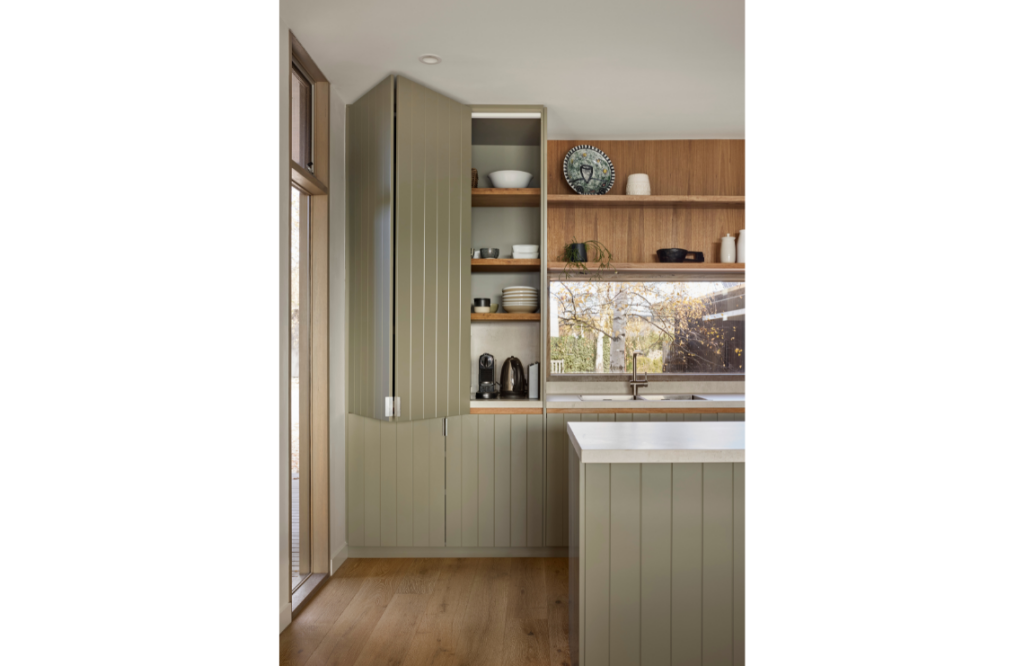
As part of the renovation, the kitchen was remodelled; it’s now warm and contemporary, in neutral earthy tones.
This home project is essentially offgrid. The mains power connection is maintained for back-up purposes. There’s a slew of eco-friendly measures. It’s all electric, with heat pump hot water, electric heat panels (space heating), reverse-cycle AC and an induction cooktop. To keep the interiors cosy, there is high-performance insulation and double-glazed doors and windows.
A 10kW solar PV system, with 13kWH Tesla Powerwall two-battery storage provides power, and there are two 50,000-litre water tanks. Wastewater is also dealt with on site. Additionally, the build is sustainable. “External cladding and decking is in FSC sustainably sourced radial timber, and all interior paint and joinery oil finishes are low VOC,” adds Luke.
It’s a home that has evolved, with pages added as its story takes on a new chapter. Luke’s favourite part of the project is the new glazed entry link. “Interestingly, as one approaches the windows in the new entry, they discover a ghostly reflection of the plinth in the glass, which appears to fill in the missing piece,” he says.
For the architect, this project was special for a host of reasons. “It’s not often you get to come back and add to a previous project, so this latest addition was a real joy,” he says.
Sometimes it’s pivotal moments in projects like these that stay with you, and for Luke, this project was no exception. “The day the builder sliced through the plinth was memorable; there was no turning back.”
This article is featured in Grand Designs Australia Magazine 14.5